Tag Archives: Travel

What is the historical significance of Hampi and which places do I visit there?

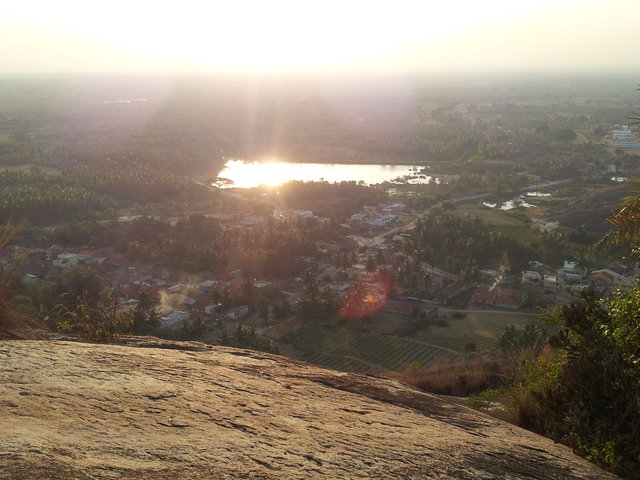
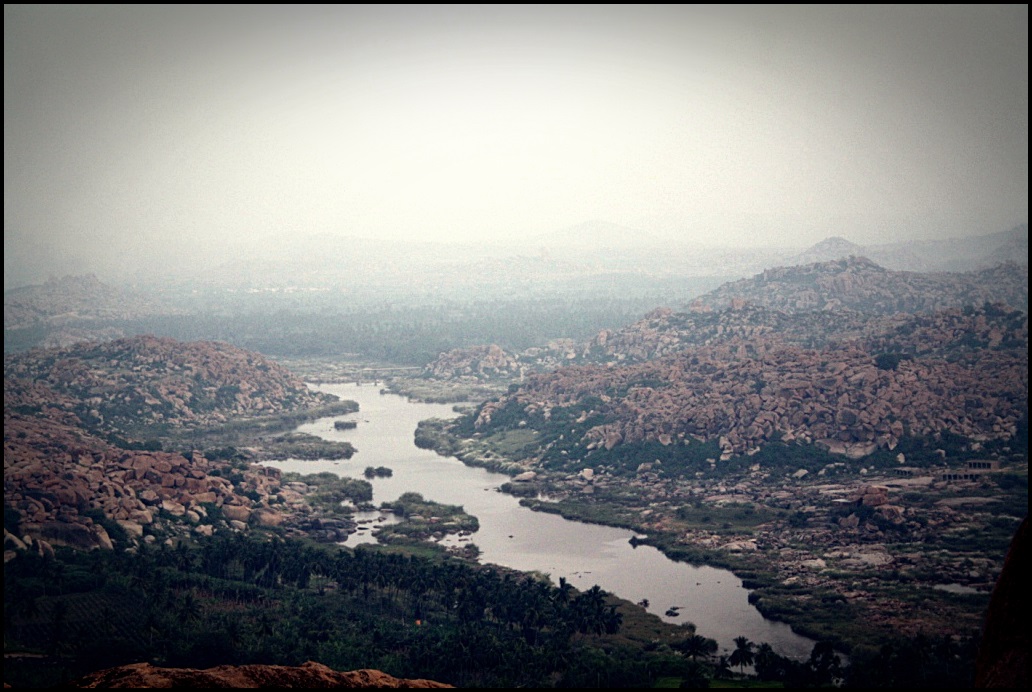
View of Hampi from Anjaneya

I’m in love with this city and this is going to be my pilgrimage destination forever! I have a love for it’s ancient archaeological structures and it’s association with the mythological references of Ramayana. That apart, there is this beautiful aura about the place that mesmerizes you to the core. That is why I make it a point that I visit this place every year. Also, my great grandfather from my mother’s side was a great Late Shri. N.S Rajpurohit, was a famous historian who has a lot to do with the excavations of certain parts which marked significance to Hampi / the Kingdom of Vijayanagara.

Pampa River

Hampi is called Hampi cause of the river Pampa now the Tungabhadra. Pampa was an ancient name for Hampi. According to legends, Pampa the daughter of Bramha did penance to please Lord Shiva. Impressed with her devotion Shiva married her and took the name Pampapati. On the banks of the river (Tungabhadra) there are numerous shrines of Shiva being worshipped.

History of Hampi

History of Hampi dates back to the chalcolithic and the Neolithic era… Could be proven from the ceramic and handmade pottery found from those ages. Also from the 2nd and the 3rd century there are rock edicts of the asokan empire found here…

Rulers of Hampi

Pre-Vijayanagara era it was ruled by many rulers primarily Chalukyas of Badami, Hoysalas, Yadavas and others. But the main founders of this empire are primarily two kings Harihara and Bukka raya. Also known as Hakka and Bukka who were disciples of Swami Vidyaranya…

Around the 14th century when Mughals made inroads to South India, they captured most part of Hampi and the Kampili chiefs Hakka and Bukka were prisoners… But soon they overthrew the Mughal empire after they were assigned to govern under Mughal Sultanates and retook Hampi… They then gave the name Vijayanagara (Land of Victory) also dedicated to Swami Vidyaranya so it’s also referred to as Vidyanagara.

Over the years Vijayanagara (hampi.in) (popularly called as Hampi) developed a unique style of architecture, came to be known as Vijayanagara (hampi.in) Architecture

That was mostly during the reign of Krishnadeva Raya under whose rule this empire saw its peak! He was abig fan of architecture and also was open to various styles of architecture Indian and Islamic… He also was a good ruler and had diplomatic relationship with the Spanish across the east coast and hence Hampi was quite open to trade with Europeans and usually gems and stones were traded for cotton and spices which were abundantly available here.

However after his death and during the reign of Ramraya Hampi faced a gruesome destruction. His son in law Ramraya was captured and killed during the battle of Rakkasatangdi after which the empire was left undefended when the Mughals ransacked this place, destroyed many buildings and later it was left abandoned for a long while for it to become a jungle and ruins remained. It was later on because of the curiosity of many western archaeologists and authors to great books namely Robert Sewell and A.H Longhurst that this place gained significant interest across the world. UNESCO’s World Heritage Site was conferred to Hampi in 1986.

Mythological Association of Hampi

There’s also a mythological association with Hampi. Locals and folklore has it that this area was the mythical Kishkinda Vanara kingdom from the Ramayana and this is where Rama and Lakshmana stayed before they headed off to Lanka in search of Sita. There are a couple of mountains and places which are believed to be the places where Sugreeva, Vali, Hanuman and Ram stayed back then…

Hazara Rama Temple

Which brings me to the Hazara Rama Temple. Hazara Rama… 1000 Rama? Cause of the 1000 inscriptions / sculptures of Rama on the walls of the temple? Well no… actually Hazara Rama comes from the word Hazarumu which in telegu means Entrance Hall This place has one of the most beautiful and intricate carvings lot of them describing what happened back in Ramayana and some of them depicting various Vishnu avatar. It was also a private temple of the royal family.

Stone Chariot in The Vittala Temple

The stone chariot is one of the most amazing structures in Hampi… If you get around clicking photographs of this monument, you wouldn’t just stop… its so beautiful. It’s made of big granite blocks and even though we may think it’s a monolithic structure it actually isn’t. The big granite blocks get covered cause of the intricate carvings on the chariot.

Musical Pillars of Hampi

Another very interesting thing in the vittala temple are the musical pillars in the photo shown above… Check out this video… to see what I mean

Well now if you go there this may not be possible as it has been restricted as there were incidents of damage to the structure in the past.

King’s Balance

Just outside the vittala temple, you’ll find the Kings Balance… I belive this custom still exists and it existed back then of course. The kings were kept in the balance which was put on this structure. Weighed against gold and jewellery which was then given away to the priests and the needy.

Lotus Mahal Complex

The lotus mahal and the elephant stables are one of the most intact pieces of architecture in Hampi… This temple was in a Zenana enclosure was believed to be a recreational area for the women folks of the royal family. There are hooks to tie up curtains and you’ll also find these terracotta pipes which are on the ceiling of this structure. They were filled with water from the well besides it and they acted as ventiatory ducts which provided cooling due to the breeze. Ancient air conditioning so to speak. The elephant stables are symmetrical set of stables with central one them being the biggest. These are unlike any other pieces of architecture as they are a mixture of Indo Islamic architecture.

Octagonal Bath

Octagonal public baths are something you’ll find. These are probably one of the oldest bathing structures which are still properly maintained… They weren’t just made out there. The stepped stones were assembled block by block after being made somewhere else. Very beautiful sight to your eyes.

Underground Shiva Temple

The underground shiva temple is in shambles… The most you can do is go and visit it from the outside. It’s completely dilapatated inside a cave filled with stench and loads of black water. There were a 1000 lingas inside, but since I’vent gone I wouldn’t know… After a point it becomes very eerie. The queens bath is a small structure, much like a swimming pool of the ancient times… or a humongous jacquzi if I may say…

Queens Bath

This is the first ruined structure you would see when you enter into the Royal center from the Kamalapura (hampi.in)-Hampi main road. For some mysterious reasons this was called as the queen’s bath. But in all probability this was a royal pleasure complex for the king and his wives. It’s a bit an assuming plane rectangular building from out side. But when you get inside, the story is different.The whole building is made with a veranda around facing a big open pond at the middle. Projecting into the pond are many balconies. An aqueduct terminates in the pond.The balconies are decorated with tiny windows and supported by lotus bud tipped brackets. The whole pool is open to the sky. This brick lined pool is now empty. But it’s believed once fragrant flowers and perfumed water filled this bathing pool. At one end of the veranda you can see a flight of steps giving access to the pool. The domical roof of veranda is a spectacle itself.

The Krishna Temple

The Krishna temple is one temple that was commissioned by Krishnadeva Raya and the architecture is significantly his. Interesting and very beautifu carvings such as that of the Mythical lion called the Yallis and the beautiful Gopis can be found here…You can also see carvings of 10 incarnations of Lord Vishnu and as soon as you enter the temple you’ll find a tortoise there… Like in temples of Halebeid and Belur.

Lakshmi Narsimha Statue

The Lakshmi Narsimha statue is probably one of the most damaged yet magnificient and huge creations. It’s the largest statue of Hampi. Narsimha is seen sitting on a coil of giant seven headed Snake. Shesa. It originally had Goddess Lakshmi sitting in his lap. However when the mughals raided Hampi they hugely damaged it thinking there would be gold and jewellery hidden inside the statue.

Badava Linga Temple

Right next to it is badava linga temple. A monolithic Shiva Linga believed to be carved by a poor woman (badava) in order to praise shiva

Sasvekalu Ganesha & Kadalekalu Ganesha

The Ganeshas of Hampi are well revered. Sasvekalu and Kadalekalu Ganesha. They are named because of the resemblance of their tummies to Mustard Seed and Bengal gram respectively. There’s a story behind the Sasivekalu ganesha. Once Ganpati was very hungry and he ate so much that his tummy burst.. He immediately found a snake nearby and tied it across his tummy and that is what is depicted in the sculpture. Both are monolithic statues.

Monolithic Bull

At he foothills of the great Matanga parvat / Matanga hill near the Hampi bazaar you’ll find this Monolithic bull, much similar to the one in a temple in Halebeidu. You trek for an hour or so you get on top of the Matanga hill from which you can get the most spectacular view of the city and it’s beautiful just before Sunset! A must visit.

Coracle Ride to Other side of the River

One of the best experiences is a ride in the coracle / boat to the Anjaneya hills The place revered to be the birth place of Hanumana. There’s also a cave where Sugreeva hid before he fought Vali to get him killed.

 Virupaksha Temple

Last but not least the most famous Virupaksha temple of Hampi which also is the only functioning temple in Hampi since the 14th Century which also makes it the only functioning temple in India. Among all temples this is the only one which the Mughals never attacked. Why? Cause of the insignia or the emblem of a pig on the door of the temple. During the Hampi Festival, this is quite the place to go, in fact during Diwali as well this place has a lot of festivities and is totally decorated. One thing to look out for is the Local Elephant inside the temple… He’s always there been there for many years now…

View Answer on Quora

Wandering Thinker & a Pondering Writer – Travelogues – 4

He stopped by the river looking up in the sky… He didn’t hesitate to randomly stare at the wilderness around the place! A gentle splash of water on his exerted face… And everything seemed all right!

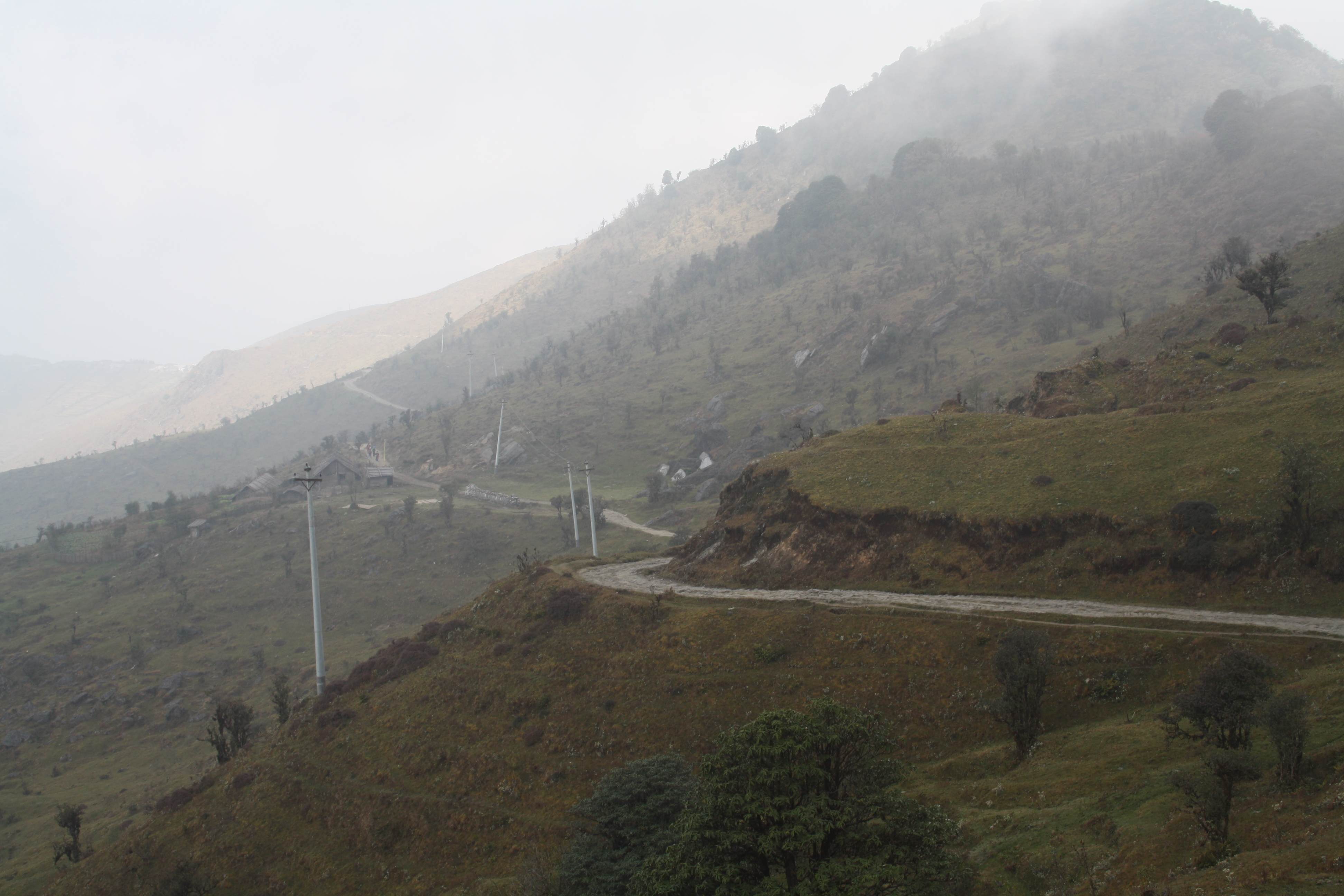
So he had already realized that a lot of distance from the top of the mountain had been covered. He also thought about the parts that were up ahead of this tricky journey, one that hadn’t yet actually started. After many years of trying to understand what connected him to the magic of the mountains and why he kept seeing the beautiful images again and again during the slumber of the night he realized it now… He had always been a fan of the terrain, being an avid mountaineer and generally being fond of exploring Himalayas he knew that this was going to be something he would do for sure. This time around though he had taken a huge break, a break to backpack all the way to the daunting mountains and figure out how far could he go. He already had a history of a lot of ardouous journeys that he had covered up until now. Taking across this long and tiring journey was something he had prepared himself for.

He had to get all the way to the mountains called Tahilla. After crossing a lot of mountains enroute the top most part across this no man’s land in a terrain that had not been trodden upon for many years. A glimpse of a few nomads and some local wanderers is all you could get around this part of the world. Sometimes you would go for days and weeks without coming across any soul on the land of the lost. But he didn’t worry so much about the pitfalls of getting lost… For he knew what direction he had to follow. He had instincts, one of an avid mountaineer, he could capture trails, one similar to a hunter. He had all those qualities that he acquired sublimally over a period of a decade of traveling across such mountains.  He knew that this quest of his was one of the most important. Why? he asked himself sometimes… An answer to which took him back… always to ask himself another question… ‘Why not??’

15 years ago his grandfather had died… He always was the reason for him to get inspired into hauling away across all these mountains. They always spoke in detail about the various terrains and the kind of forrests they were engulfed amongst. There were a lot of maps and epigraphs with charts that his grandfather always carried along with him. Shange, (meant Buddha) as he was named by his grandfather knew a lot of the secrets of various destinations across these terrains. Some tough, some rough and most of them always ordained with various different levels of challenge! The ones that called upon the most ardouous travellers to push the envelope and try and fight the harsh conditions to come across various hazards of a journey into the wilderness and into the unknown. Only to discover a secret and a very important key peice of puzzle that no one had solved before. Shange’s grandfather always knew that this quest was not one of the empty types. Many a times he told Shange to keep an eye on the odd things and certain trails that were easily spotted to take twists and turns. Yet, they challenged each other at points to figure out short cuts to different points. Tough, but faster to reach… Many a times when they went hiking, they always closely observed the nature around themselves. They always meticulously detailed out their plans to pick up peices of references or traces that could be useful in one of the future revelations on the journey as it traversed through these terrains. There were a lot of clues and a lot of references from various other places. One that were quite relevant to this journey of his. A treasure hunt of sorts, so to speak. And by the time he had reached the first river, he knew that the journey had now begun and it was going to be a completely different escapade from here on…

 “This is where I’ll set up my tent tongiht…. Looks good enough to camp…”  he said to himself with a sigh of exertion and tiredness that he could feel beyond his bones…

 He stopped by the river looking up in the sky… He didn’t hesitate to randomly stare at the wilderness around the place! A gentle splash of water on his exerted face… And everything seemed all right!


Enchanting South India – A route to rediscovery

“To traverse beyond the limitations of my mind, I travel to look upon the journey within myself.” With these thoughts, I set off on an adventure of a lifetime. A voyage to the mysterious beauties that unravel the most amazing parts of my country. A travelogue to capture the ‘Incredible India’ down South.

My visit to Tamil Nadu, Pondicherry and Kerala had begun. I had heard from my friends, people didn’t speak anything else but their local languages out there. That made me equally foreign to these lands as anyone else who came from any other country.  To me, this was a challenge, and a trip that would be monumental after I had completed it. With solitude on my side I had decided to explore over 17 superb locations in 15 days. Most importantly, I was going to discover the beautiful culture South India had to offer and document each and every location as a journal on my blog. With a Vernian, inspiration l had to ensure this journey went  down in my books as the best one!

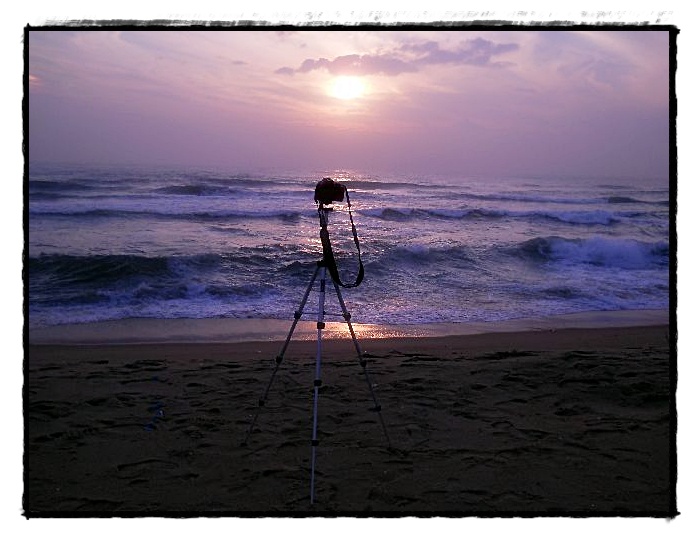
It all started with Chennai. From my helpful twitter friends to the conductors and everyone else warmly responding to my requests, helping me out wherever I went in little or broken English they spoke in. Yet always willfully extending their support without any intent but to help me out. With a sultry atmosphere, one I hadn’t anticipated, I started my journey by heading off to the Marina Beach. The warm, humid air in Chennai bore resemblance to the weather that I was used to during the summers in Mumbai. But, in winter, this humidity came to me as a surprise particularly when it was about 20-22 degrees centigrade back home… Nonetheless my objective was to start off with a beautiful array of sunrise shots to tell a story of this marvel in Chennai! The experience of going to Marina beach, travelling amongst the locals in the train was something I could relate to. Very similar to our Mumbai Locals… Gave me content in the fact that our cities, despite the cultural difference, had a lot in common.

The Marina Beach, Chennai

The Marina Beach, Chennai

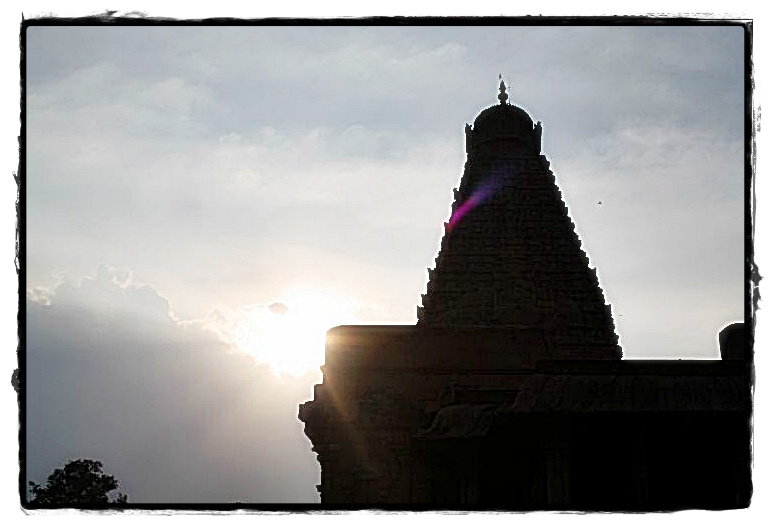
Rest of Tamil Nadu was a quest for my spiritual journey across the fortresses and temples of the most majestic kinds in the country! From a  mysterious yet wonderful experience in Kancheepuram, to  satisfying and peaceful tryst with Lord Shiva in Thrichy, every temple had a story of its own. The most appealing temple was of course Thanjavur, unique in its own way and its rustic feel gave a  nice ambience to the story it had to showcase. Different from all the other temples in the state, it had a charm in its own. Ruled by various dynasties from the Cholas to the Nayakas and the Marathas, it gave a completely versatile feel to itself. The grandeur it had was read between the brightness it shone despite the sun setting down upon its face.  Abode to one of the biggest Nandi Statues, the  Brihadeeswara Temple was  an enchanting destination.

Birhadeeswara Temple, Thanjavur

Birhadeeswara Temple, Thanjavur

Then there was Rameshwaram. The same island where existed the famous temple of Lord Rama, the mighty king from Ramayana. This was the same location where an army of millions of apes (vanar-sena) built a bridge made out of floating stones engraved with Lord Rama’s name itself. This bridge built to take the army across the borders of India to the Golden empire of Lanka and wage an epic battle of great proportions upon the demons of this kingdom.

Inside Rameshwaram Temple

Inside Rameshwaram Temple

Something you can’t forget in Hindu mythology. A battle that spoke to us of the triumph of good over evil! A battle that till today is considered as a conquest of moral right over plain wrong. It was quite  an experience, one that I would never forget.

While Tamil Nadu has its own share of spirituality I also enjoyed the beauty, nature and wildlife at the most amazing waterfalls ever… I sat in a small canoe or sort of a paddle boat to take the streams of Hogennakalu Waterfalls. A noteworthy place with  perennially flowing streams of waterfalls. Off the border of Karnataka and Tamil Nadu, one can easily reach this place from Salem by bus and literally take a boat towards the Karnataka border on the disputed Cauvery river. With an aquarium and a crocodile rehabilitation center to its attraction, this place certainly is thronged by children, youngsters and elders alike.

Hogennakal Waterfalls

Hogennakal Waterfalls

Finally Tamil Nadu ended with a short visit to the mystical land of Kanyakumari, popularly known for Triveni Sangam, meeting point of the three oceans that surround the peninsular region of our Incredible India. One that envisages the true feeling of being in touch with the spiritual side of yourself. Known for The Swami Vivekananda memorial rock . A place where the great leader attained enlightenment of sort and  found bliss within himself. Visiting the most beautiful temples in our country to being  overwhelmed by a sense of spirituality my journey across the state of Tamil Nadu truly gave me an understanding of oneness to myself.

Tamil Nadu certainly took a lot of my time and energy due to constant traveling in state transport buses in this rugged sojourn of mine. Whereas, my stay in Pondicherry was one of great relaxation and unwind. A visit that made me realize how time stood still and made me feel like a recluse of sorts in a land of the unknown.

Pondicherry Beach

Pondicherry Beach

Highlight of Pondicherry was tasting delicious food of various cultures dished out at the most amazing restaurants in town. From Chettinad food at the Apache Restaurant to french delicacies at the Le Café, Pondicherry was all about living life with the luxury similar to the tastes of most of the Europeans around. Spending three magical days exploring various parts of Pondicherry on a rented motorbike, places like the French Colony, the museum, Auroville and a lot of shopping streets across various parts of the town gave me the feeling of belongingness to that place. Sipping beer at the beach restaurant at night, listening to the roaring waves in a calm that gave most frenzied thoughts a form of tranquil made me realize what we miss in our caught-in-a-rut kind of a life.

Chettinad Food at Apache

Chettinad Food at Apache

Lastly, being in Kerala, God’s own country was like being in heaven itself. A boat ride in the backwaters of Kerala got me close to nature and  made me believe in what their lifestyle stood for… Very quiet, peaceful and serene… The melodious sound of birds chirping in the background and a real feeling of standstill, told me a lot about how people  loved and lived life in this paradise.

Kerala Backwaters

Kerala Backwaters

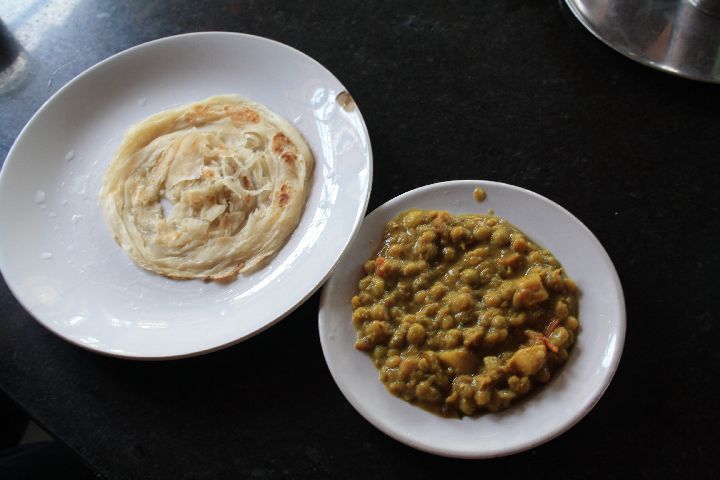
One of the most memorable trips within Kerala would be my infamous boat ride from Kottayam to Alaphuzza. It’s listed as one of the recommended things to do by Lonely Planet Magazine. From the start it was memorable especially after gorging on the sumptuous Malabari Parota with Kadala Curry.

Malabari Parota & Kadala Curry

Malabari Parota & Kadala Curry

What a way to start off a journey across the Venice of Kerala. Going to Venice has always been my dream… Until I get there, I have to make do with this one! A notable thing we did on our way back was to stop by at the very famous RBLOCK Island. We ate some  good food and had local coconut palm beer, also known as Toddy… This Island was manmade by over 5000 villagers led by Mr. Baker. This was done in order to get more land to cultivate Paddy… A fantastic place for you to take  a pitstop and eat some  delicious food.

Lastly, I couldn’t ask for anything better than finishing my trip with a visit to Fort Kochi, a place that will be etched in my memories for its diversity and remarkable beauty, especially with its blend of cultures and religions. The Jew Street and the Paradesi Jewish Synagogue… gave me a mesmerizing  feel of being in a place of some rarity. You will  find a very different setting out here and experience a different feeling while walking on this street. The Paradesi Synagogue is the oldest synagogue in the Commonwealth of Nations. Then there are the Chinese Fishing Nets, with magnificent fixed installations for an unusual form of fishing makes for  great photographs.

Chinese Fishing Nets

Chinese Fishing Nets

The end of my expedition. Travelling around, wandering like a nomad for 15 days. A feeling of bittersweet, told me that my journey was over, just like the setting sun when I left Fort Kochi. Indeed at the end of that 15th day I felt like Phileas Fogg, whose surmounting adventure had successfully come to a fulfilling end. One that I will cherish forever until I come back to soak it in yet again…

P.S This is my writing sample to Glimpse‘s ‘Correspondent Program for Fall 2011‘, Also the shortened version of it is my submission to WorldNomads Travel Writing Scholarship for 2011 which can be read here

© Copyright 2011 Srinivas Kulkarni. All rights reserved

Share

The Tiger Kid of Himalayas…

Himalayas, Nepal, Jaobari, India, Travel, Mountains, Trekking,

Jaobari Terrains of HiImalayas

This was a few months back when we were trekking in the North Eastern Himalayas… The Sandakphu trek to be precise. Every once in a while you meet spirits that give you such great vision of your own life that you can’t even imagine what heights you can reach.

Buddhist Philosopher, educator & peace builder Daisaku Ikeda once said

“The human spirit is as expansive as the cosmos. This is why it is so tragic to belittle yourself or to question your worth. No matter what happens, continue to push back the boundaries of your inner life. The confidence to prevail over any problem, the strength to overcome adversity and unbound hope – all reside within you.”

This story is a true depiction of how this really applies. A lot of times we are so overwhelmed by the many tasks which we give utmost importance to, we tend to forget the real reason we are here on this planet. Many times we focus on the tasks which have no underlying purpose or very little importance, that we forget what we can do if we stop thinking in boundaries or shed the limits. This story tells us how we as adults have stopped imagining behind certain boundaries and stopped pushing the envelope when it comes to achieving something.

Buddhism, Monastery, Dalai Lama, Monk, Spirituality, Himalayas

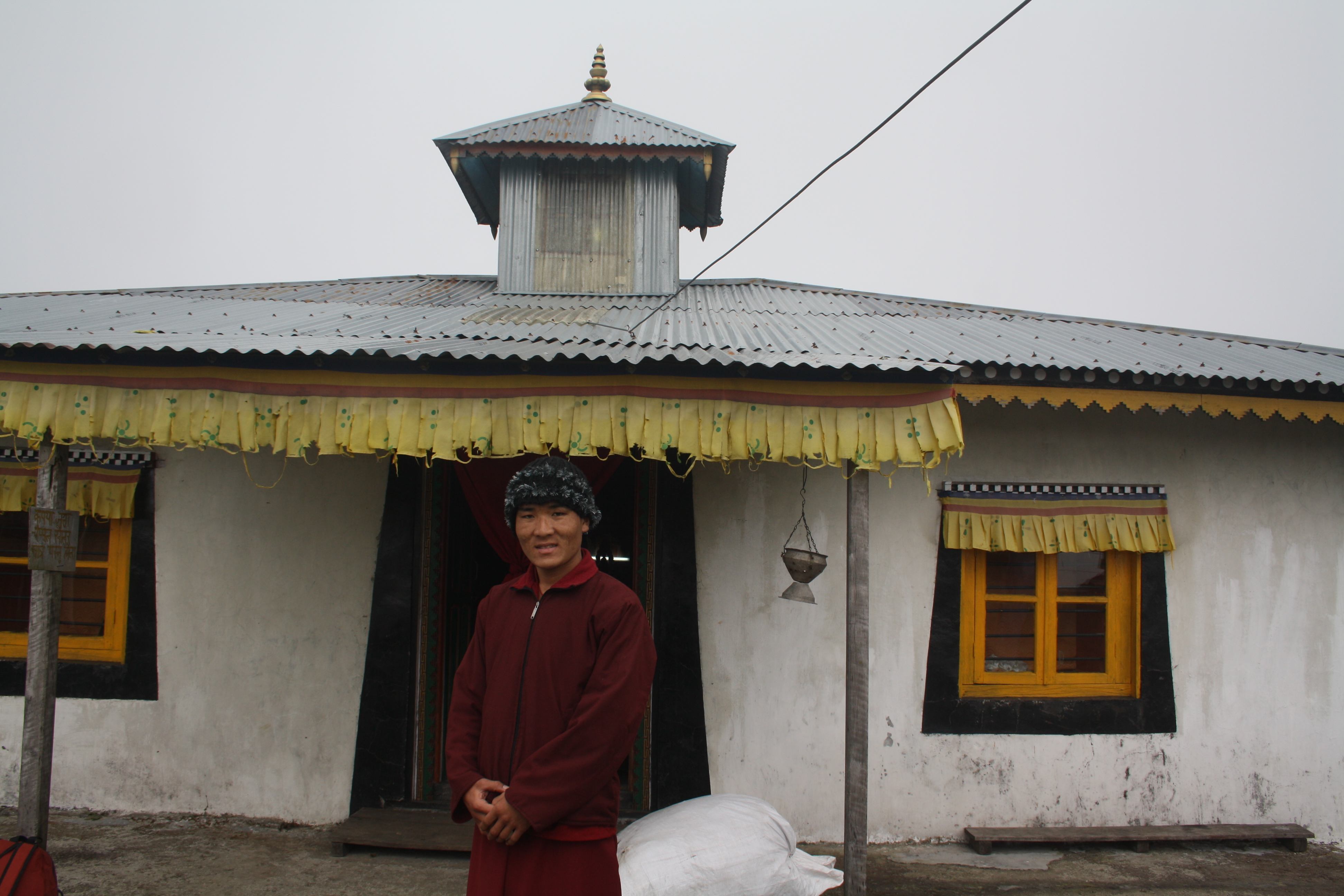
Shange Norbu of Jaobari Monastery

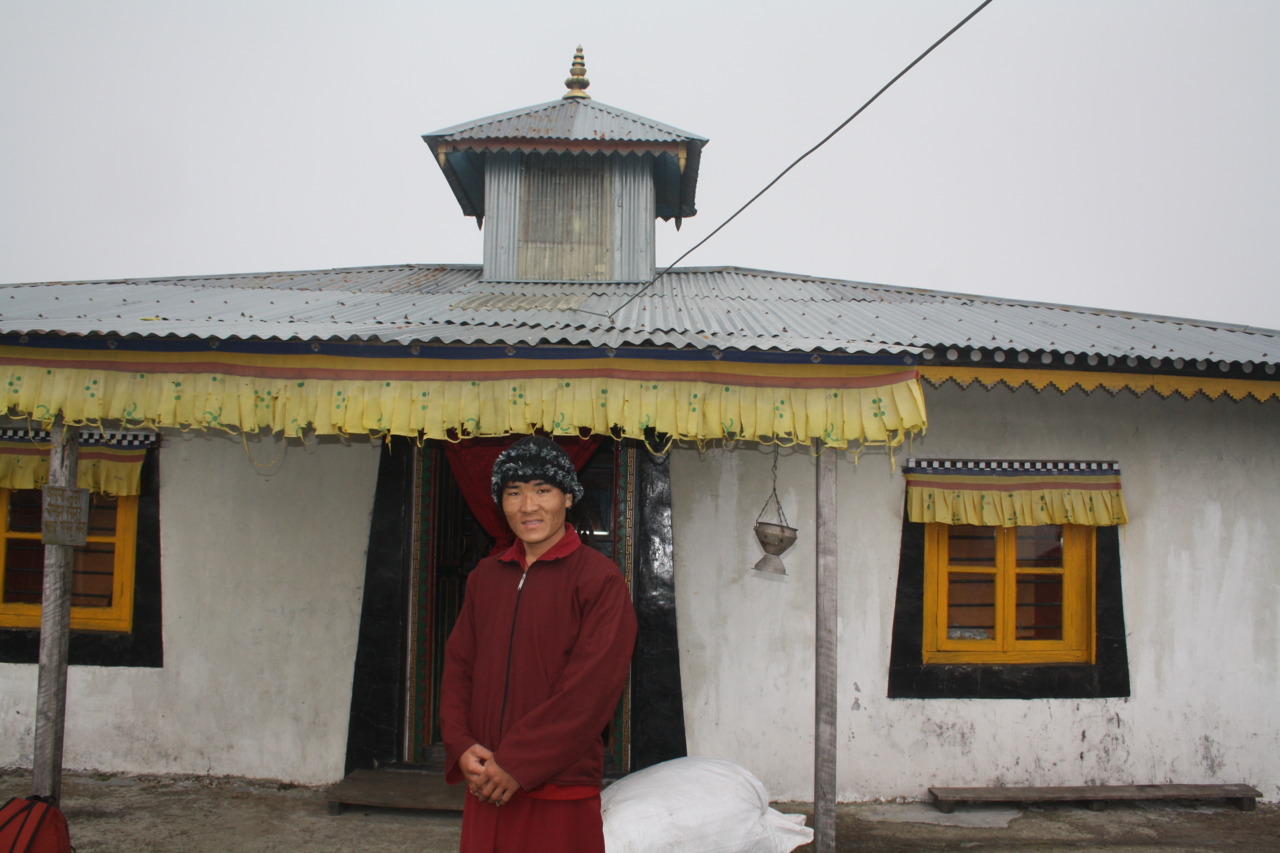
While trekking the Himalayas, we came across a small monastery in the Nepal side on the Indo-Nepal border. Jaobari village to be precise. We decided to visit the monastery and spend some time while catching our breath. We met the monk who lived there, Shange Norbu. Shange is another word for Buddha, he proudly told us. He gave us information about the monastery. He also told us that he teaches the kids there. We could see some kids playing outside eating some porridge in a small bowl. When we went inside, what was most striking was the utter peace and serenity which made the monastery quite blissful. Besides the striking calm, we realized that it was much warmer inside than it was outside. So that was quite a relief as we knew we had to trek a lot more and climb about 10 kms with a steep ascent.

While the others were resting, I decided to take a stroll around and click some pictures around. After getting a few shots of the breath-taking view I headed a little further, I met this kid. The kid was very playful and he was enjoying himself and doing just nothing. Generally this is probably the last point where civilization ends and the terrains start. A few houses here and there, otherwise the whole plateau after this is just mountain ranges. So most tourists who have come, would stop going further at this point while the trekkers move on to climb the magnificent Himalayas.

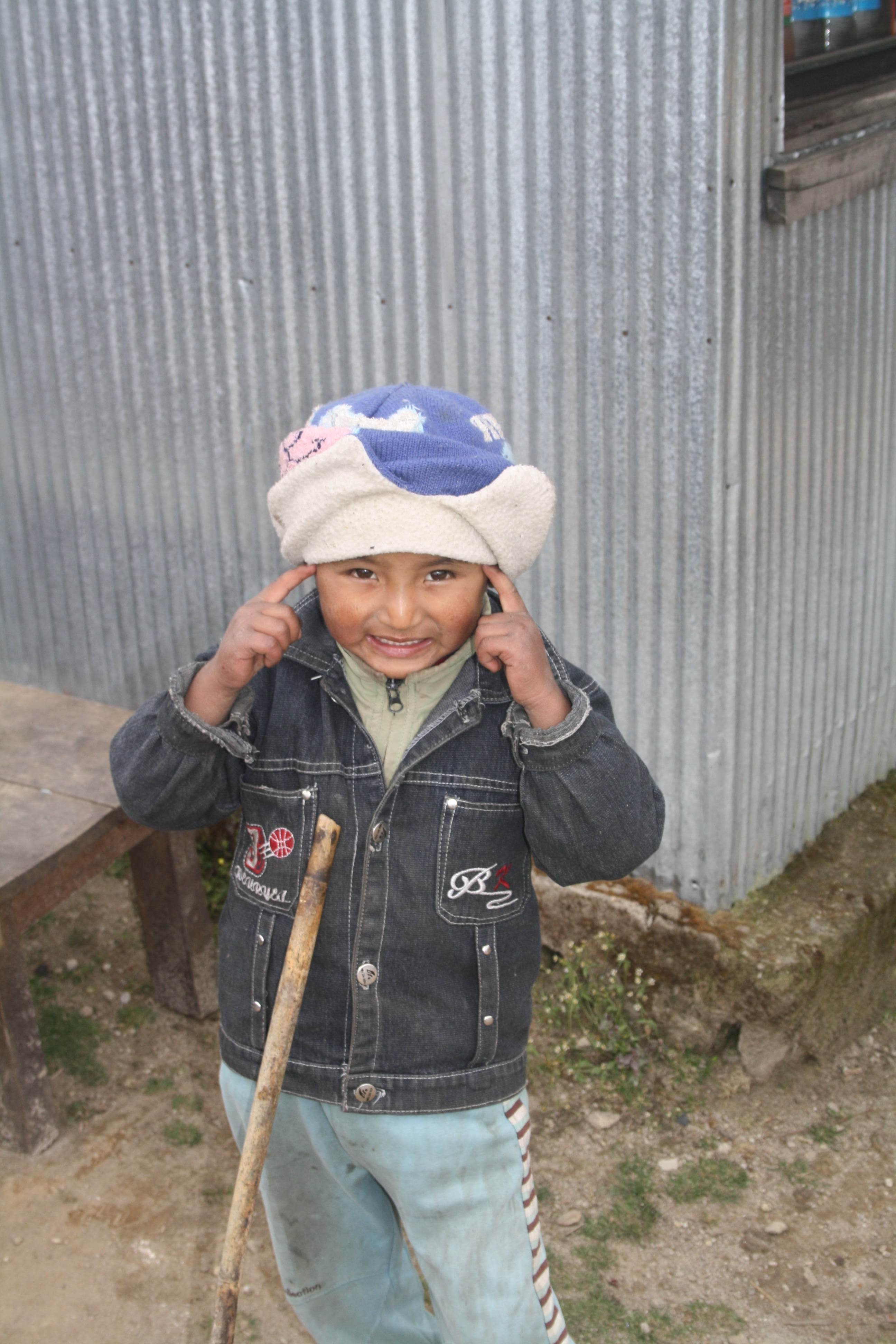
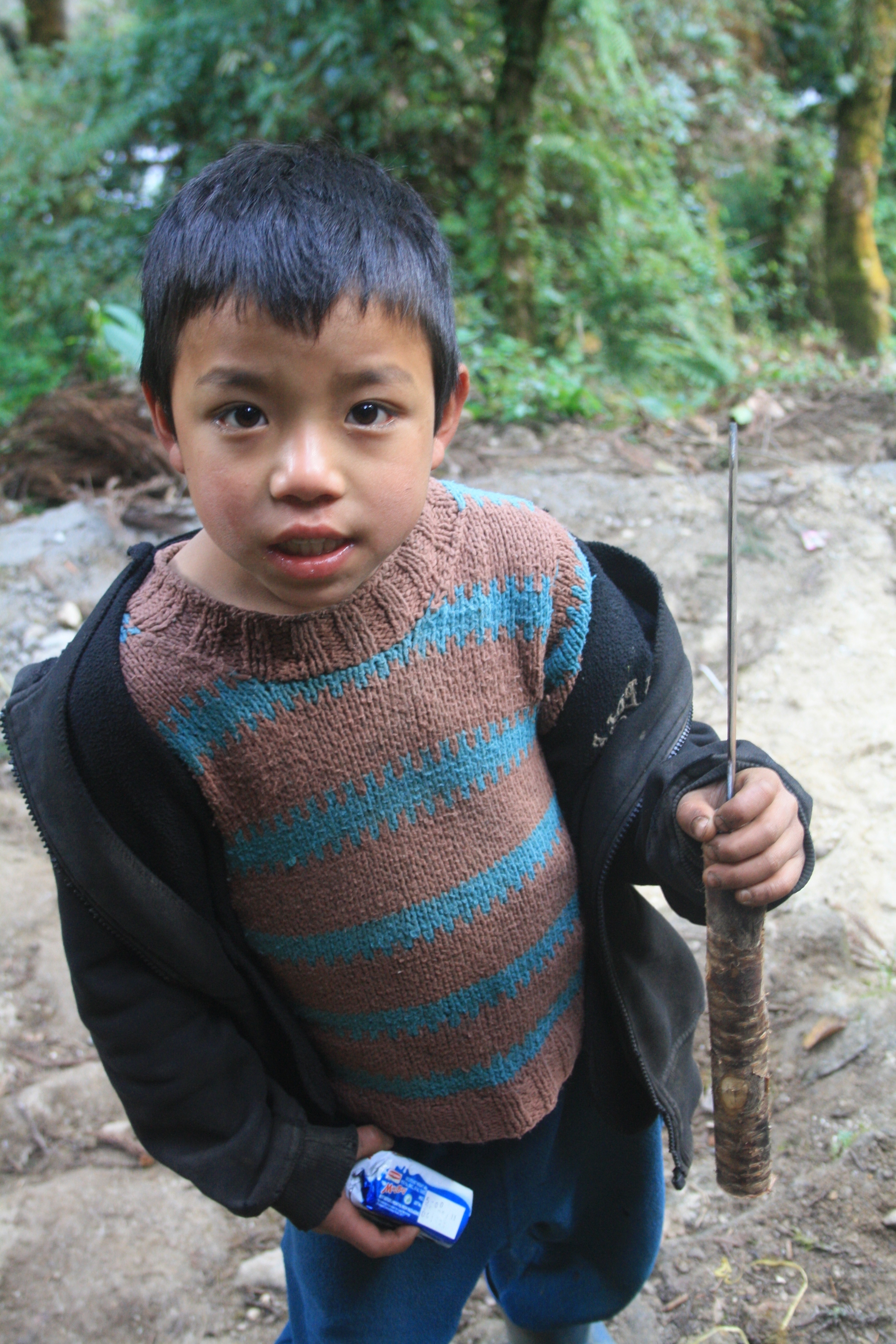
The Tiger Kid of Himalayas

The Tiger Kid of Himalayas

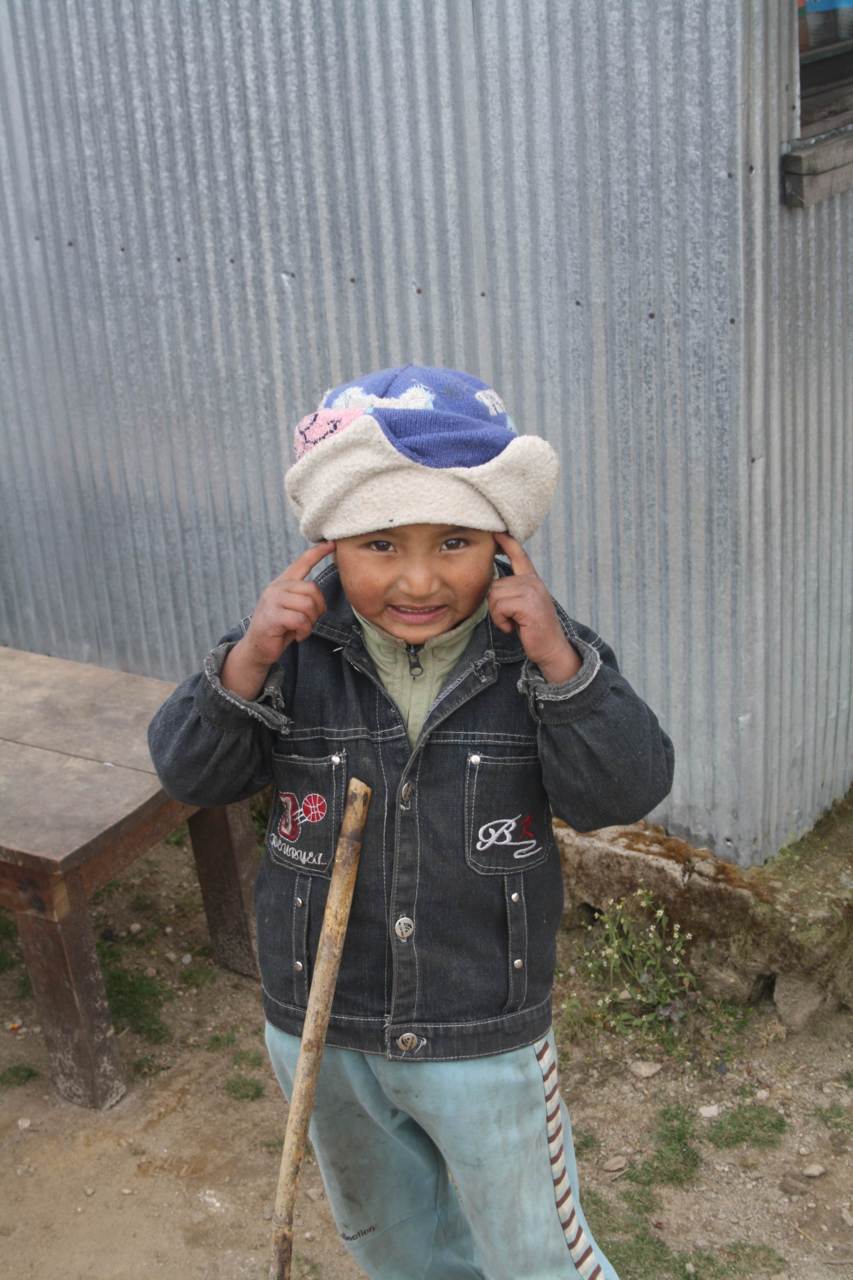
With a really nice winter cap covering his ears and a denim jacket to keep him warm, he looked very comfortable and was in his own world. His smile was innocent and his brown eyes were like deep ocean. He had a stick with him, which he held on to very closely. I took a few pictures of his and tried to initate conversation. But communication in a common language was a mystery to the both of us. We resorted to our body language and yes, eye contact… He smiled at me, I smiled back… Then he put his hands to his head.. A gesture to tell me something.  Probably, to show me that he had great imagination. Imagination that made his mind greater than the regular one. To me it looked pretty much like the thing Sheldon Cooper from the Big Bang Theory does when he stares at you and tries to get your brain to explode… But obviously this gesture had a different meaning altogether.

Nonetheless, after a few exchange of glances and communication through our eyes, he said something… something which I didn’t understand but I asked Shange to translate, who was standing nearby. He laughed when he heard what the kid said. That made me even more curious as to what was this kid saying. I asked him to translate it to me and this is what he said.

“If you go on top, the tiger will come and kill you… But don’t worry, I’ll help you and fight him off with this stick.”

I’m not kidding, that’s exactly what he said, according to the monk. Hence the laugh. But I was blown away, blown away by the astronomical level of thinking and ultimate confidence within himself. Now, I’m pretty sure, he was told stories of great white tigers in the Singalila National Park stretch of Sandakphu. One that ‘we’ know do not exist, stories of great ‘dragon warriors’, which we think are myths and kings who have slayed tigers with their bare hands. Considering that, using a stick to kill a tiger is definitely something which is easy for him, now isn’t it?? Something he believes in and in his world, that’s how the ending of this story is. Him emerging victorious and a saviour to my life. The great hero of Jaobari as I’d like to call him. Come to think of it, it could be achieved scientifically if you hit the right spots, but that’s a different point altogether.

Do you remember as kids we had so many dreams and for us boundaries meant nothing. Do you remember as kids we wanted to go to space as astronauts, we wanted to become actors, we wanted to become cricketers and a lot more… What happened to those dreams? All that was possible and for some it became a reality. For a those who couldn’t get there, well, it’s never too late…

We have to stop putting boundaries to our thoughts, limitations, and stop compromising by just saying, life is a compromise. Actually when I recollect this story, I truly feel it isn’t… As Daisaku Ikeda says, The confidence to prevail over any problem, the strength to overcome adversity and unbound hope – all reside within you. How many of you have realized this?

Gomateshwara – Jain Wonder of Shravanbelagola

Karnataka and it’s beauty… always is amazing. I love every bit of it. This was another huge sculpture / statue that I had in mind and wanted to visit this for a long time… From Bangalore, I took a bus to Hassan. There are direct buses to Charannayapatna from Majestic bus stop in Bangalore, but very few and the one at 8:00 AM had already left. From Charannayapatna, there are local buses which take 15 bucks to Shravanbelagola. Nonetheless, I decided to go to Hassan. It takes about 4 hours to reach Hassan and from there you get a lot of buses to Charannayapatna, Haleibedu, & Belur as well.

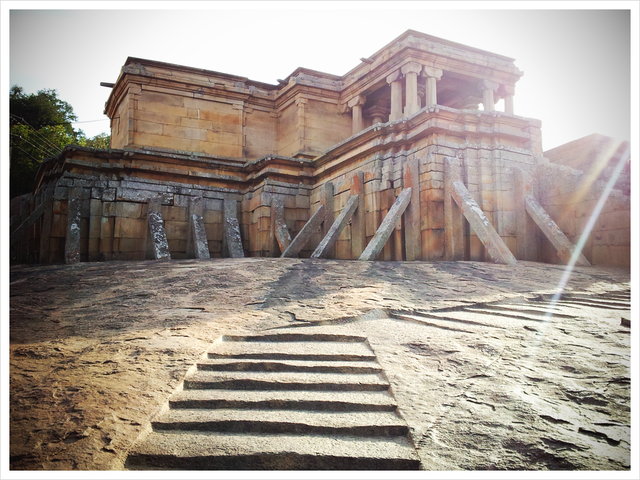
Once I reached Shravanbelagola, I decided to check in to a local restaurant at the foothills of the Gomateshwara statue… Really dirt cheap room for Rs. 200 bucks a night. Awesome!!! I had enough time to climb the top of the hill and hang out till sunset to experience the beauty of Shravanbelagola & Gomateshwara!

Then began my exploration of Sravanabelegola & the beautiful statues and here’s what it had to say:

Shravanbelagola is a well known place of pilgrimage which gets tourists from all the world. People from allover the country visit this place. The world famous image of Gommateshwara is here. ZVery ancient and beautiful Jaina temples are here. This is a sacred place especially for Jains. Also very famoys is the occasion of  “Mahamastakabhisheka” (great head ablution ceremony), it’s every twelve years.

The first thing which meets our eyes as we enter Shravanbelagola is a big lake. Beautiful steps have been constructed around it. A fort and also “Kala Mantapas” surround it. This lake is called ‘Sveta Sarovara’ or white lake. It’s Kannada equivalent is ‘Biliya Kola’ or Belagola’. the place connected with Shravana or Jain ascetics. Hence the name Shravana – Belagola.

The Lake - Kalyani

The Lake – Kalyani

We see the beautiful and artistic statue of Sri Gommateshwara Swamy on the summit of Indragiri. Gommateshwara is also called Bahubali.

According to Jainism theology,  there was a period in the world when happiness and peace reign supreme. Truth and dharma flourished during that period. It was called Utsarpini. There was another time when justice, truth and goodness decline everywhere. This period is termed Avasarpini. During this time of deterioration, twenty four Thirthankaras (realized souls) incarnate this world and guide people in the right path, by teaching them canons of truth and dharma.

Among the twenty four Thirthankaras, the first one is Purudeva. He is also known as Vrishabhadeva or Adinatha. Vrishabhadeva had two wives. The elder queen was Yashaswathi who gave birth to Bharatha and other hundered suns and a daughter by name Bramha. The younger queen

Sunanda gave birth to a son by name Bahubali and a daughter by name Saundari.

Vrishabha ruled over his Kingdom with pomp and pleasures for many years. After a while he renounced the world. While he did so, he made his elder son Bharata the King. Bahubali was crowned as the Yuvaraja (Heir apparent). Bharata conquered the whole world and in his conquest of the world he also waged war against his brother as he was told by the priests that there were enemies within the city and they were not submissive to Bharata. They were none other than his brothers. All of his brothers were disgusted by Bharatha, and renounced their kingdom to join their father, except Bahubali. He came to fight Bharatha.

Battke was about to take place between the armies of Bharatha and Bahubali. At that moment the ministers fearing that both armies would suffer heavy losses in the battle suggested that only the two Bharatha and Bahubali – might fight other. The winner would be the emperor.

The last battle was to be fought by hitting heads with fists. Bharat had the first shot, because he was older than Bahubali, which knocked Bahubali nearly to the ground. Then, it was Bahubali’s turn. Bahubali’s name means ‘Bahu’ – Arm, and ‘Bali’ – Strength, he was known for the immense strength of his arm. Everybody knew and worried, that if Bahubali’s blows struck Bharat, Bharat would probably die. This contest could have been easily won by Bahubali striking Bharat. But as Bahubali raised his arm to land a blow, he paused, realizing that fighting his elder brother for land, wealth, and power was neither sane nor righteous. Indeed, it would have been a grievous moral failure for a son of a Tirthankara.
As a rule for a Kshatriya, once he has taken action, it is not possible for him to withdraw or retreat. So, instead of landing a blow on his older brother with his raised arm, he simply changed direction, pulling out his own hair with the same hand, thus avoiding striking Bharat. With this, he put aside all of his possessions, and became a solitary renunciant. Learning from this example, Bharat came to understand the folly of his greed for land, money, and power forgiving his younger brother. Bharat continued to ruled for some time, until eventually joining Lord Rishabdev as a solitary renunciant.

Gommateshwara - Bahubali

Gommateshwara – Bahubali

The fight with his brother troubled Bahubali, so after much contemplation, he decided to give up his kingdom and take up the ascetic life. He took to meditation with a thirst for truth, but – it was for ego that he took to meditation on his own.

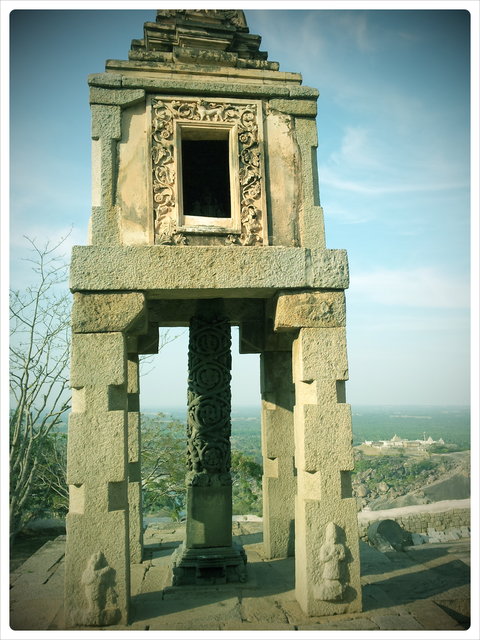
So before you entere the place there is an amazing architectural fascination called Tyagada Khamba…

Tyagada Khamba

Tyagada Khamba

Tyaga Kamba at the entrance of Gomateshwara. Erected by the minister Chavundarya in the 10th century. Its believed that this is the place he distributed gifts to the needy. Some theories also believe he choose this place to renounce all material things including his life. It’s a pillar that seemingly is hanging from the center. A handkerchief can easily be passed from one side to the other under this hanging pillar. This spot was being used by the people for giving away things as gifts. Hence it’s called by the name Pillar of Sacrifice or Tyagadha Khamba. (Tyaga – Sacrifice)

Gulakayajji

Gulakayajji

Overall this is a place where you will feel totally amazed, amazed by the serenity and peace that it has to offer. The magnificence and silence at which the Bahubali statue stands… You’ll feel really amazed by the amazing carved black stone statues of 24th Thirthankaras inside. After visiting the temple I decided to explore the cliff at the back of the temple… The sun was about to set and what better place than to sit at the edge of the cliff and ponder into the horizon, reflect upon life thoughts and beauty of everything around me… Just don’t need anything else in the world… than this beautiful memory.

So I leave you guys with this amazing snap of the entire town that could be seen. A view from the edge of the cliff… The view of the city and the sound of the town in the backdrop. Cattle making noise, birds chirping, kids playing, autos. Still very Peaceful… Serenity at it’s best…

Sunset across the horizon behind the temple

Sunset across the horizon behind the temple


Bindaas Baaji!

Rajasthan, Ajmer, Baaji, Pushkar

Baaji

6 days and 7 cities!!! Yes, that was the plan way back in 2009. It was the end of the year and my resolution was already formed. After leaving my mainstream job, I was about to get into a career switch into writing and something more creative. So my resolution was ‘Go With The Flow’ And that’s when we had planned this trip. My best friend and I, on an impromptu on the spur of the moment, hitchhiking or going by any means of transport available across Rajasthan. Initially we had some destinations chalked out and that’s about the planning that we did…

What happened later is another story and the way the entire trip turned out to be was again something very fascinating. Something that made sure that these kind of trips would be my goal for the next few years…

Anyways, so once we reached Udaipur from Mumbai, our plan was to reach Jaisalmer by getting on to a bus. We boarded a local bus that would take us there in a matter of 8 hours or so… But in a bit, we realized that Ajmer and Pushkar were nearby destinations… Well, that was all we needed, we quickly got down and decided to hitchhike to Ajmer… It was quite a task to do so, but we were traveling light so it didn’t quite matter as much. What was really important that if we got to Ajmer on time, we had enough time to visit the Dargah and then head to my friend’s in-law’s place. So that was one reason why we wanted to go to Ajmer first…

All this impromptu madness meant that we didn’t bother thinking about distances calculating time or anything… But thankfully before we went far, we realized since Ajmer was near and my friend had a place there, we could stop there for dinner and then head off to Jaisalmer.   So we waited on the highway, where we had got off for someone to pick us up… Dusty, hot & scorching sun overbearing on our head, we still had no choice but to wait! Within a brief while we saw an Armada Trax.. Immediately we asked him to stop. Turned out, he was a local who ran trips between Udaipur and Ajmer on a regular basis. We quickly hopped on. Besides it the trip didn’t cost more than 90 bucks. The downside of it… The vehicle was awfully crammed… But that’s the fun of it ain’t it?? The bumpy roads at times, the curvy ones too… everything was fun as we were all out on the road. Completely off the hook. Something that we wanted to experience than ‘Luxury Travel’ After all we wanted to get the sense of enjoyment and the local culture.

That is when we met Baaji… The ever smiling, every happy and the most amazing personality on this trip, absolutely made our journey. One look at him and his smile and you can feel the positive vibe and the aura that he carries. I just couldn’t resist taking his picture, I asked him what his name was in Hindi… He couldn’t speak Hindi that well, probably spoke Marwari (Folk language of Rajasthan) and the others told us he’s called ‘Baaji’. He gave us permission to take his snap. He also told the others to tell us that he liked our bags. We had simple backpacks but for whatever reason, he liked our bags…

After a while, there were many people and the entire vehicle was packed. Baaji was sitting at the window seat right next to the door. We covered some distance and at a certain point, there was a middle aged woman standing with two small kids and one baby in her arms. The driver stopped by as it was a remote place. He wanted to ensure that there wasn’t any problem. After a short conversation, we realized that they had to be dropped to a nearby location and that someone had to go on top of the trax…

Before any of us could offer the position, Baaji, quickly got out, made the woman sit inside… Caught hold of the baby and let other kids get in while she made herself comfortable. Since he was the first person near the door, before anyone could react, he had made up his mind to sacrifice his comfort and offer it to the much needed woman. We tried to persuade Baaji to sit inside and that someone else will easily go up there  and sit. To which he smiled and nodded his head and jumped on top of the Armada mumbling something with a smile.  I asked them what he said, and here’s the translation of what he said:     “If you live for others, you really live life. If you live for yourself, then you are really dead…” Truly this was a Bindaas Baaji! One word… “Respect”

This is my submission to IndiBlogger’s  Expedia – Around The World Contest

Murudeshwara – Lord Shiva’s Magnificence at it’s best…

So it had been my desire to visit this place for quite a while now. The last time I was near Murudeshwara was when I had stopped by over a long weekend, a ride taken to visit Gokarna. Too bad, I didn’t realize back then that it was hardly 70 kms from Gokarna. So I had made it a point to ensure that this visit happened this year. And thankfully, it did happen. I had planned a trip in Karnataka, specifically off the locations that had interesting stories with regards to it’s grand mythological and historical references. A seed had been planted in my head, after reading Dr. Devdutt Patnaik’s books on mythology. I was all the more fascinated and had read two books of his on Lord Shiva. A belief doesn’t become stronger unless you have corroborated stories or beautiful understanding about any subject. That’s when I realized that this trip was going to be even better.

Night Train to Murudeshwara

A night’s journey in the Matsyagandha Express was smooth as I traveled sleeping like a log and woke up to realize Murdeshwar had already arrived at 4.30 in the morning. I had anticipated that I’d reach there early in the morning, but had not thought about what I’d do after reaching there so early. Having said that, as always, I tried my luck in the Railway quarters, only to realized there was one room available and there were a middle aged couple along with me who had to visit someone in the town and I decided to go into the waiting room and sleep some more before I headed to the temple.

Fresh early morning cold with beautiful breeze certainly enchanted my mind and made me realize that my week long tour of Karnataka had already begun. After taking a short nap for an hour, I decided to stroll near the station and see what’s around. Silent as a grave, yet serene, the railway station was quite a beauty. I decided to click some snaps of the sunrise which certainly gave solace to the mind.

Sunrise at Murdeshwar Railway Station

Sunrise at Murdeshwar Railway Station

After freshening up, the best thing I could do is get a cup of tea and head towards the temple. But since I didn’t want to carry my backpack, I decided to keep it in the cloak room and come back in the afternoon and collect it. The problem was, my backpack, didn’t have a lock and they wouldn’t accept it. But thankfully, the railway employee suggested that I can keep the bag safe with the canteen guys and collect it later. I picked up my DSLR and my mobile phone with me, after which I didn’t have any valuables and I felt free to keep the bag with him. Nonetheless, the best part about travelling across South India, is that more often than none, you will encounter really amazing people who would help you out at each step of the way.

So there I began towards the temple, it was hardly 3 kms from the railway station and I decided to walk it up enjoying the early morning breath of fresh air…

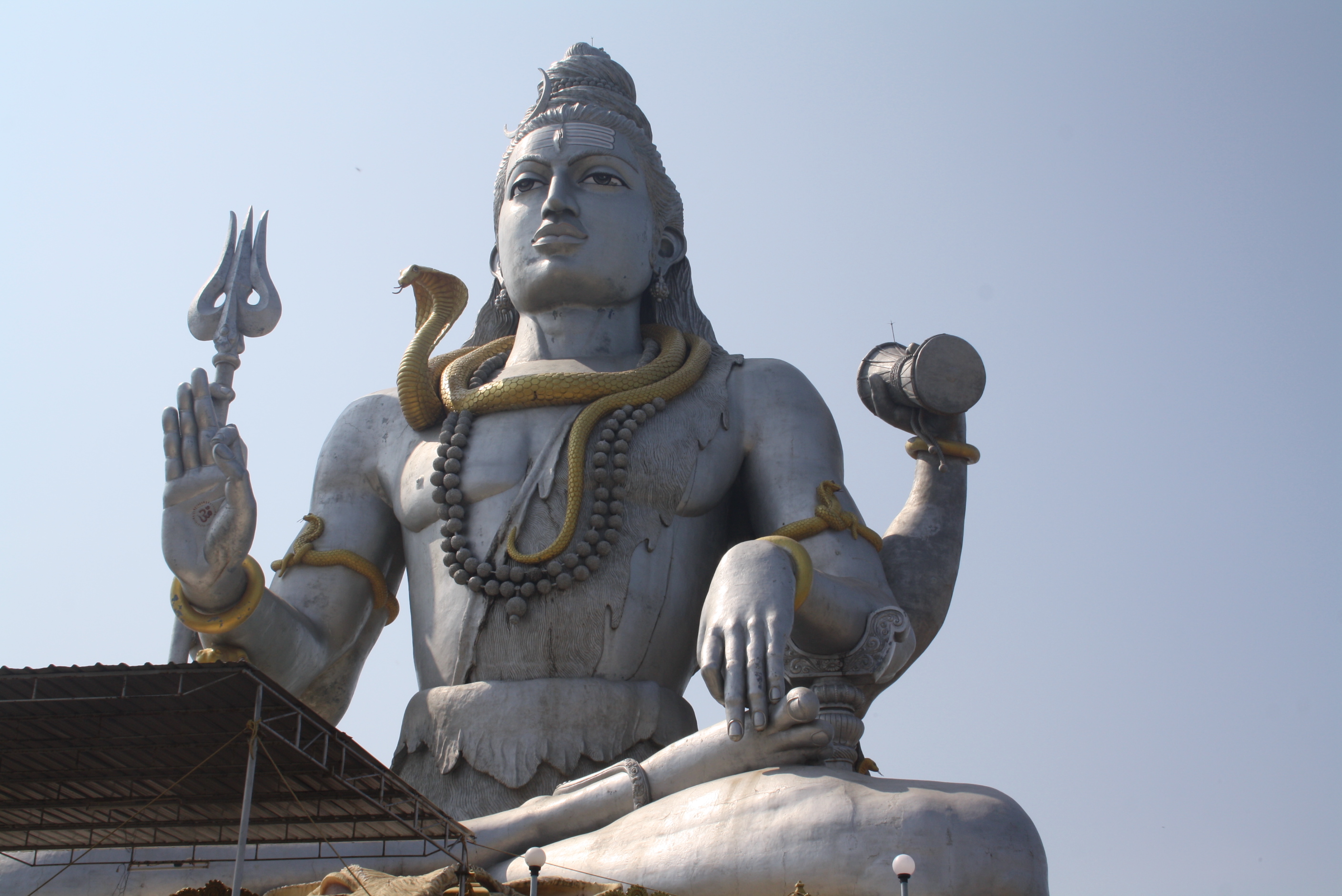
Amazingly, Murdeshwar is quite unknown and secluded and hadn’t it been for the second largest statue of Lord Shiva constructed by  the R.N Shetty trust, it’d not be as fascinating as it is or attract so much crowd. Yes there is historical significance of this place connected with the Atma Linga story of Ravana and Lord Shiva. Which is probably why it’s more significant and hence someone took the initiative of building something here. Also, just across the Murdeshwar beach are the Nettrani Islands where you can Scuba Dive, which I’d had to save for later as this was a shoestring budget trip 😉

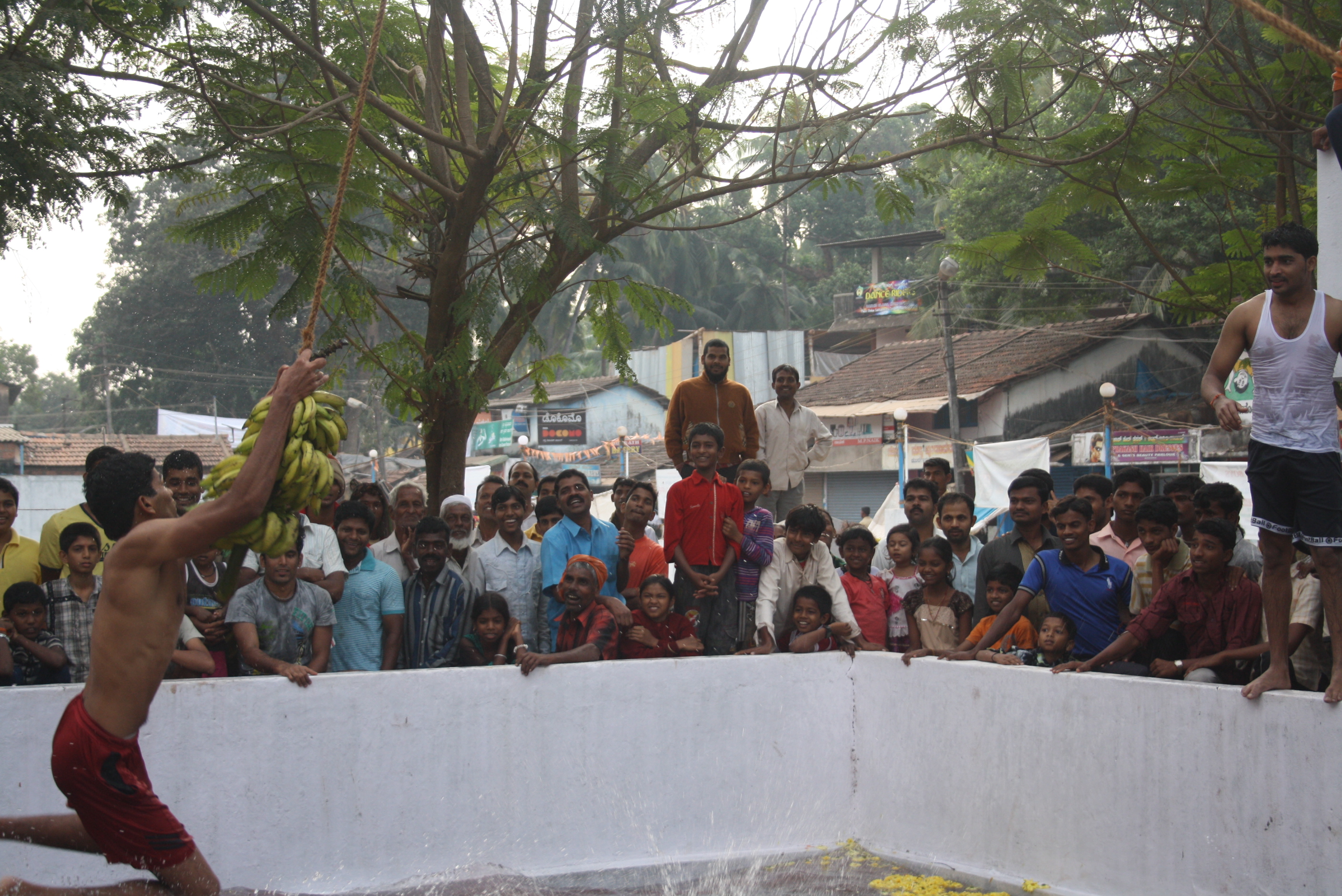
A fascinating game played in the village

A fascinating game played in the village

While I approached the village and I could see the Lord Shiva statue’s head in the distant horizon, I saw a crowd that had gathered nearby. Just near a small tank near another temple, there was a group of onlookers to this interesting game of fetching the bananas. To begin with, there was a pulley on which a bunch of bananas were attached. On the edge of the tank on top of the wall, a group of young boys, decked with flower crowns waited their turn to jump in the air and try to bring down that bunch. While they tried their best to do so, the person who controlled the pulley tried his best to not let them have it. Enjoying this activity with a playful spirit others were cheering for these boys. While I’m sure there must be some significance, symbolic, religious or historic, when I asked around, very few knew what it was. All I got to know was it was a sacred activity performed by boys of the landlord’s family. My best guess is that these boys were entering into adulthood and this is a significant symbol of them trying to fight for the price catch (Metaphorical: A wife, materialistic life, food for themselves, responsibilities) well that was my best guess.

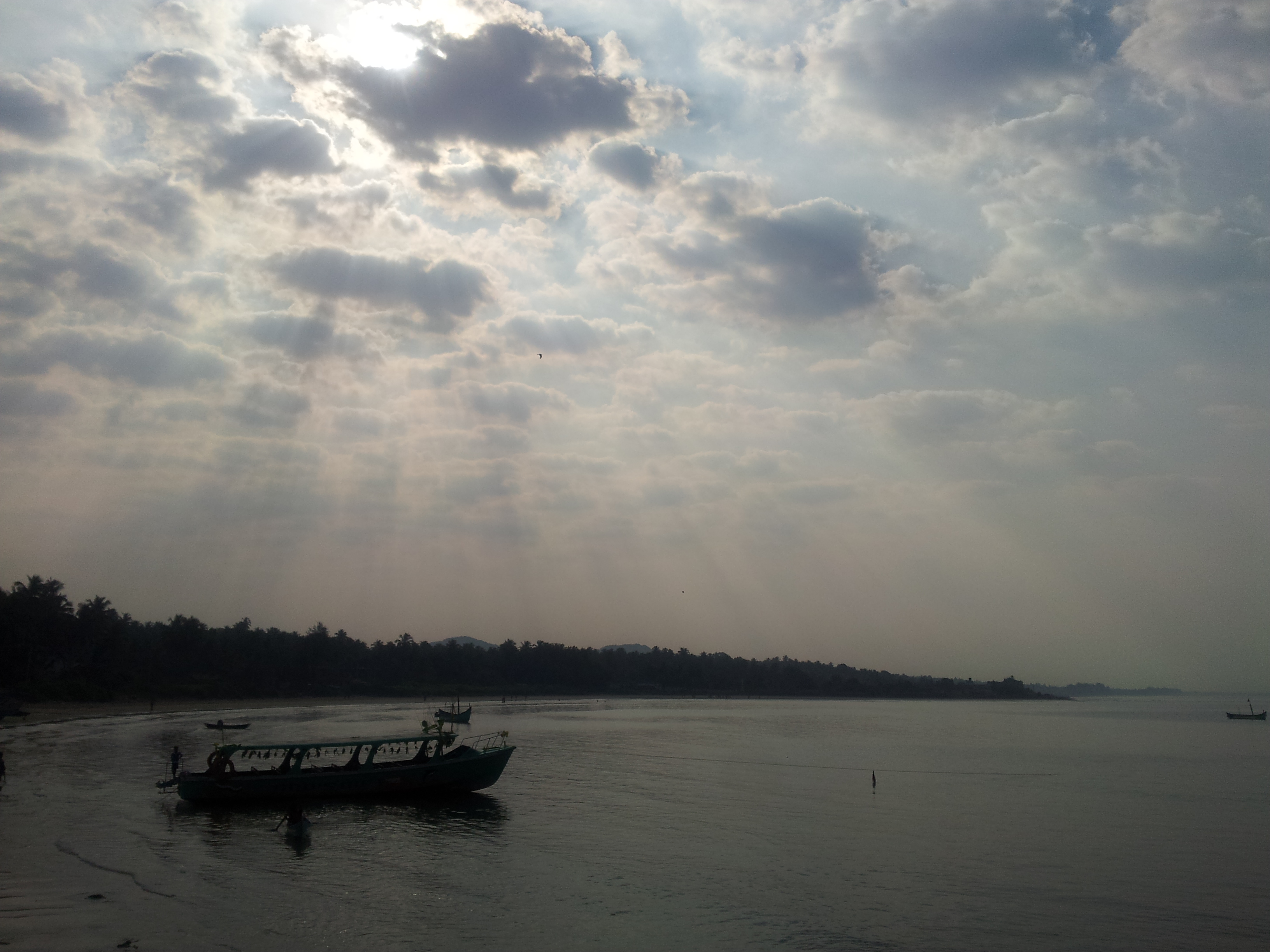
Murdeshwar Beach's Serenity

Murdeshwar Beach’s Serenity

As I walked past the village, and reached closer to the Temple, I could see the Murdeshwar beach in the vicinity and it was truly beautiful. Something that gave joy to my sight and peace of mind to my soul. The next thing was to of course, visit the temple itself and then behind it the Lord Shiva’s Statue…

The Royal Entrance to the Temple -  Rajgopuram

The Royal Entrance to the Temple – Rajgopuram

There is a lift that will take you to the top most floor. All you have to do is pay 10 rupees and wait a bit with other people. But once you go on top, you’ll realize that the wait is worth it… From the top, you can see the Lord Shiva’s Statue, which will give you the top view and that is also very enchanting, with the sea in the backdrop.

Lord Shiva's Statue as seen from the Temple Gopuram

Lord Shiva’s Statue as seen from the Temple Gopuram

Inside, the temple is very serene and there’s ample space for you to just sit and meditate. It’s a blissful experience. But, one of the fascinating things you’ll notice is the Temple’s smaller gopuram has enchanting encryption and engraving which is also gold plated. It contains the entire story of Ravana being tricked by Ganesha with the help of Lord Vishnu in order to protect Lord Shiva’s Atma Linga. (The source of power to immortality.)

After that, to get an up-close and personal view of Lord Shiva himself, I headed to the base of the statue, which has the cave, in which a description of the entire story of how Murudeshwara became a significant place in the context of Ravana, Lord Shiva and the Atma Lingam. They also play an audio clip inside the cave, which tells you the story in Kannada and English if I remember correctly.

Lord Shiva's Statue at the base of the temple

Lord Shiva’s Statue at the base of the temple

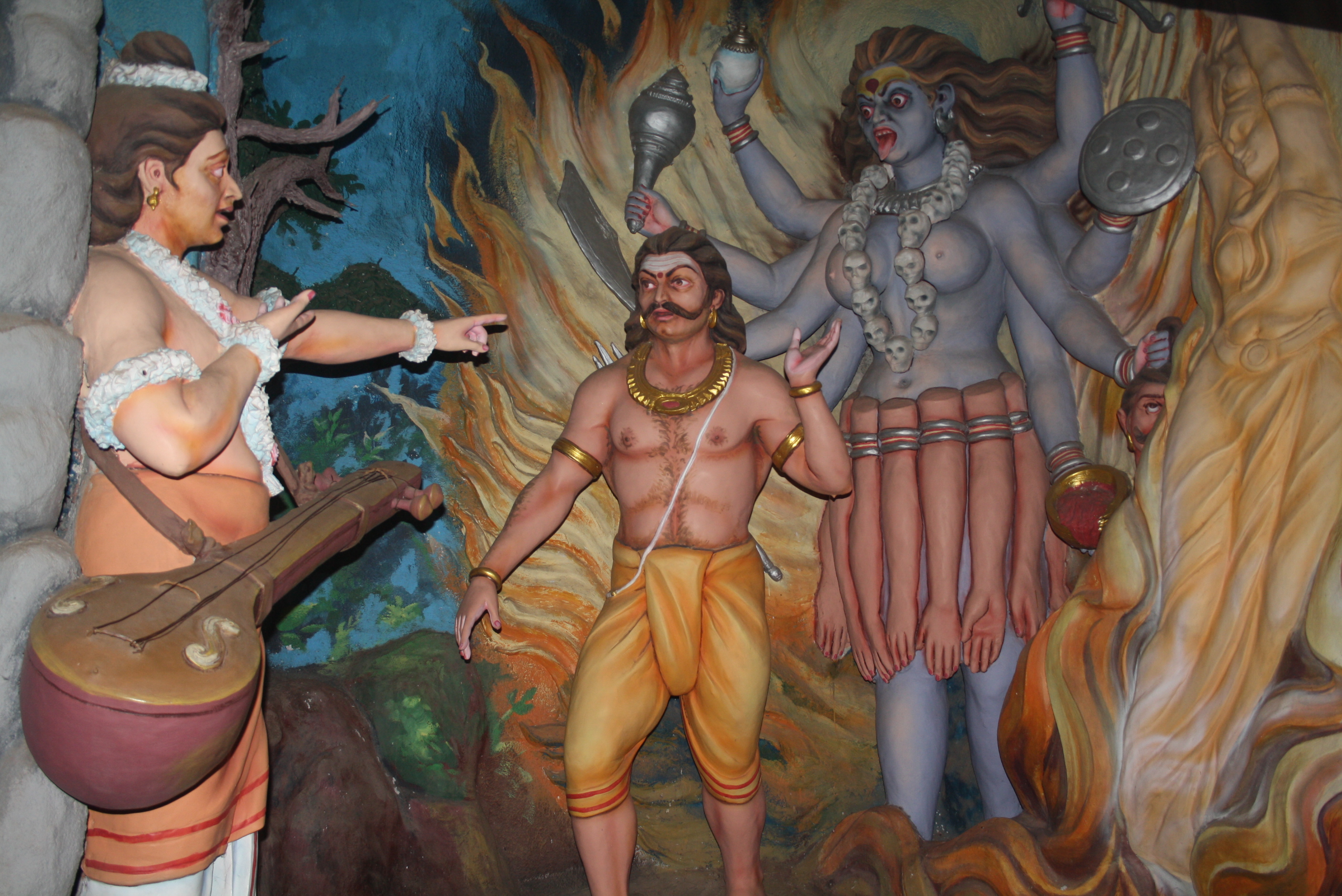
The Story of Murudeshwara

Ravana's Mother worshipping Shiva's Linga

Ravana’s Mother worshipping Shiva’s Linga

Ravana’s mom just like Ravana, was a stout devotee of Shiva. Also, she knew about the Atma-Linga of Lord Shiva and the powers it could give his son.  The Hindu gods attained immortality and invincibility by worshipping a divine Lingam called the Atma-Linga. She convinced his son Ravana, to pray to Lord Shiva and attain the Atma Linga.

Ravana Promising his Mother

Ravana Promising his Mother

Ravana promised his mother that he’ll seek out Lord Shiva, pray to him and conduct penance but at whatever cost, he’ll get the Atma-Linga

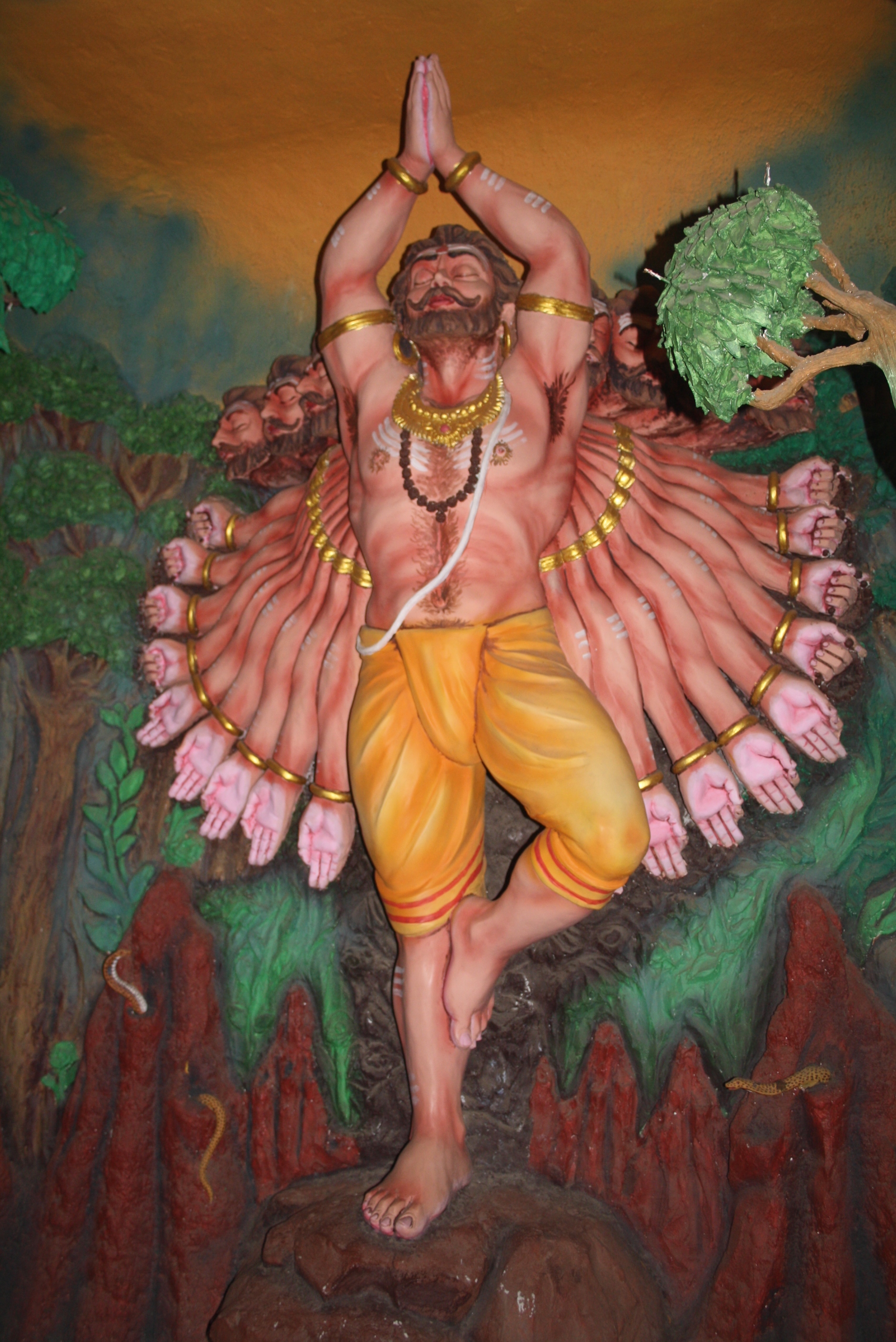
Ravana Praying to Lord Shiva

Ravana Praying to Lord Shiva

Narada goes to Vishnu

Narada goes to Vishnu

By this time Narada had asked Lord Vishnu to change Ravana’s mind. By this time Narada had asked Lord Vishnu to change Ravana’s mind. As a result of this plot, Ravana asks for Goddess Parvati, and Lord Shiva offers her to him.

Ravana asks for Parvati

Ravana asks for Parvati

On his way back to Lanka Narada tells Ravana that Lord had not given him the real Parvathi and that the real Parvathi was in Pathala who was a King’s daughter in the world below the earth.

Narada talking to Ravana

Narada talking to Ravana

So Ravana frees his companion,goes to Pathala and marries a king’s daughter ,assuming her to be the real Parvathi.

Ravana marrying the King's Daughter

Ravana marrying the King’s Daughter

Ravana's mom asks for the Linga

Ravana’s mom asks for the Linga

He then returns to Lanka, where his mother asks him for the Linga. Ravana then comes to know of the tricks played on him by Lord Vishnu.

Ravana Prays for Forgiveness

Ravana Prays for Forgiveness

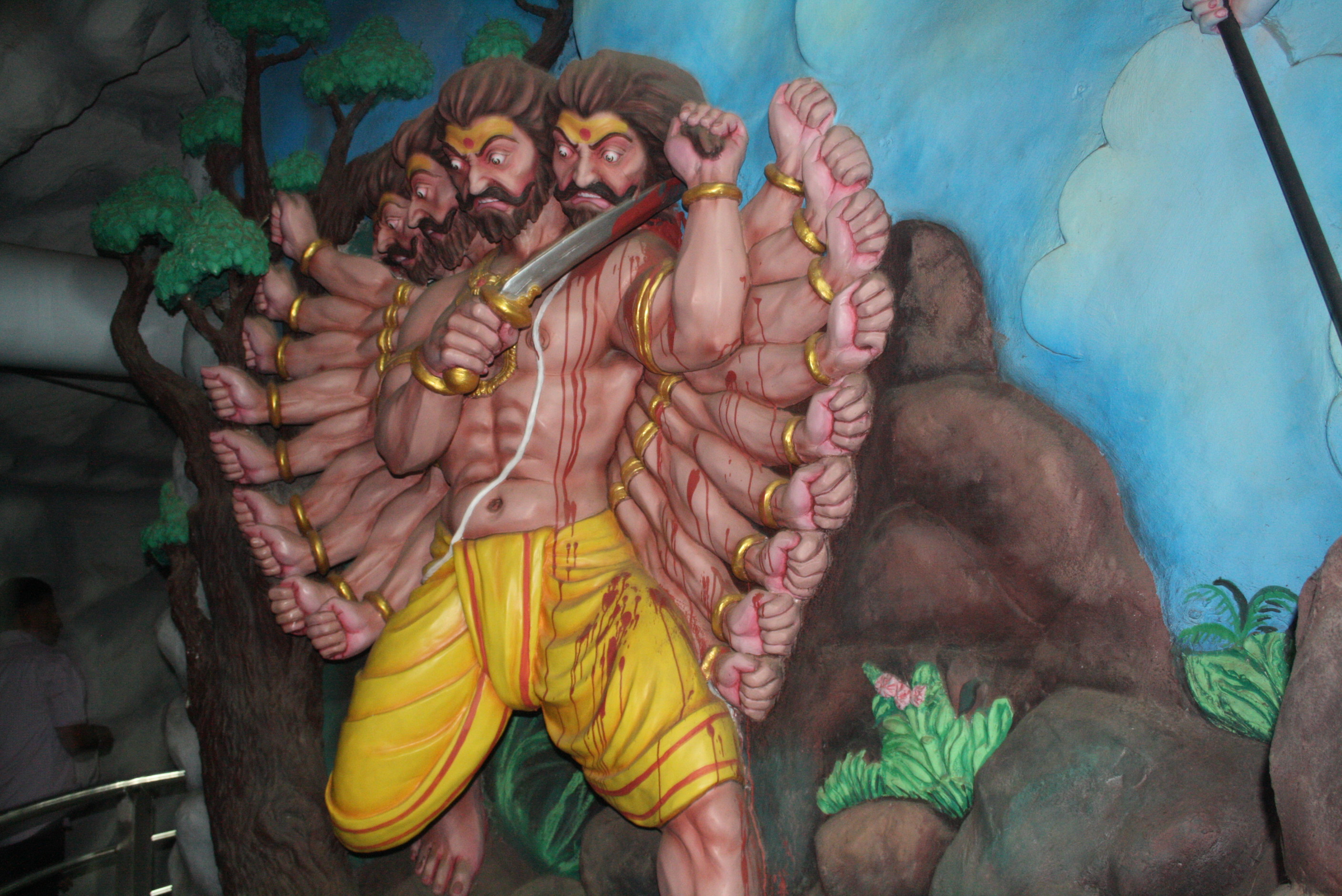
He therefore prays to Lord Shiva again, begging for his forgiveness. This time, it’s even more difficult to get Lord Shiva’s attention. He then decides to offer sacrifice by cutting his heads.

Ravana cutting his heads as sacrifice

Ravana cutting his heads as sacrifice

Lord Shiva is moved by this dedication and restores his heads. Also when he appears,  Ravana requests the AtmaLinga as his boon. Lord Shiva agrees to give him the boon with the condition that it should never be placed on the ground. If the AtmaLinga was ever placed on the ground, all the powers would return to Lord Shiva again.

Narada approaches Lord Ganesha

‘ Narada approaches Lord Ganesha

Having obtained his boon, Ravana started back on his journey to Lanka. Sage Narada, who came to know of this incident, realised that with the AtmaLinga, Ravana may obtain immortality and create havoc on earth. He approached the Lord Ganesh and requested him to prevent the AtmaLinga from reaching Lanka.

Lord Ganesh knew that Ravana was a very devoted person who used to perform prayer ritual in the evening every day without fail. He decided to make use of this fact and came up with a plan to confiscate the AtmaLinga from Ravana.
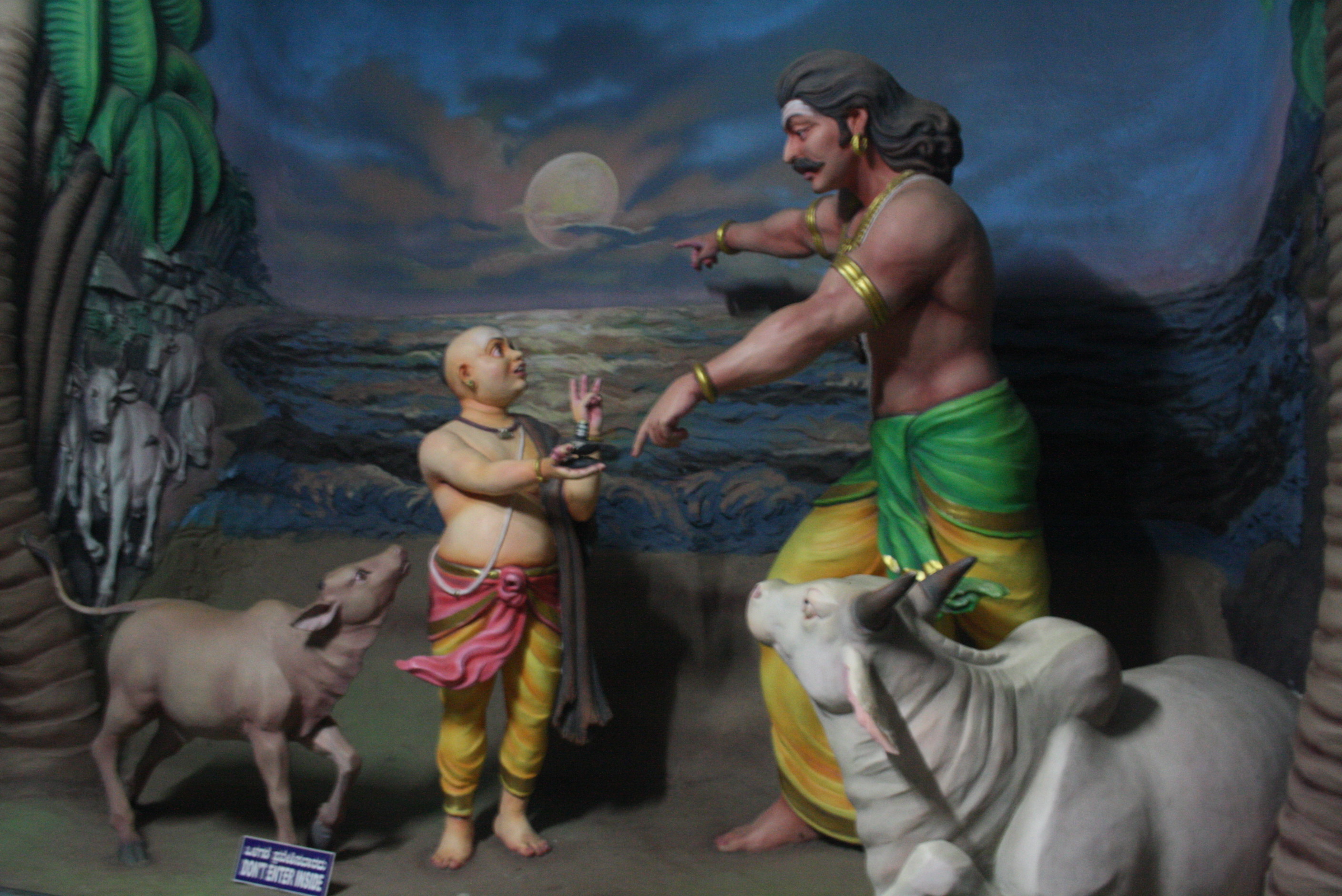
As Ravana was nearing Gokarna, Lord Vishnu blotted out the sun to give the appearance of dusk. Ravana now had to perform his evening rituals but was worried because with the AtmaLinga in his hands, he would not be able to do his rituals. At this time, Lord Ganesh in the disguise of a Brahmin boy accosted him. Ravana requested him to hold the AtmaLinga until he performed his rituals, and asked him not to place it on the ground. Ganesh struck a deal with him saying that he would call Ravana thrice, and if Ravana did not return within that time, he would place the AtmaLinga on the ground.

Ravana giving the Atma Linga to the Bramhin Boy

Ravana giving the Atma Linga to the Bramhin Boy

Ganesha places the Atma Linga on the ground

Ganesha places the Atma Linga on the ground

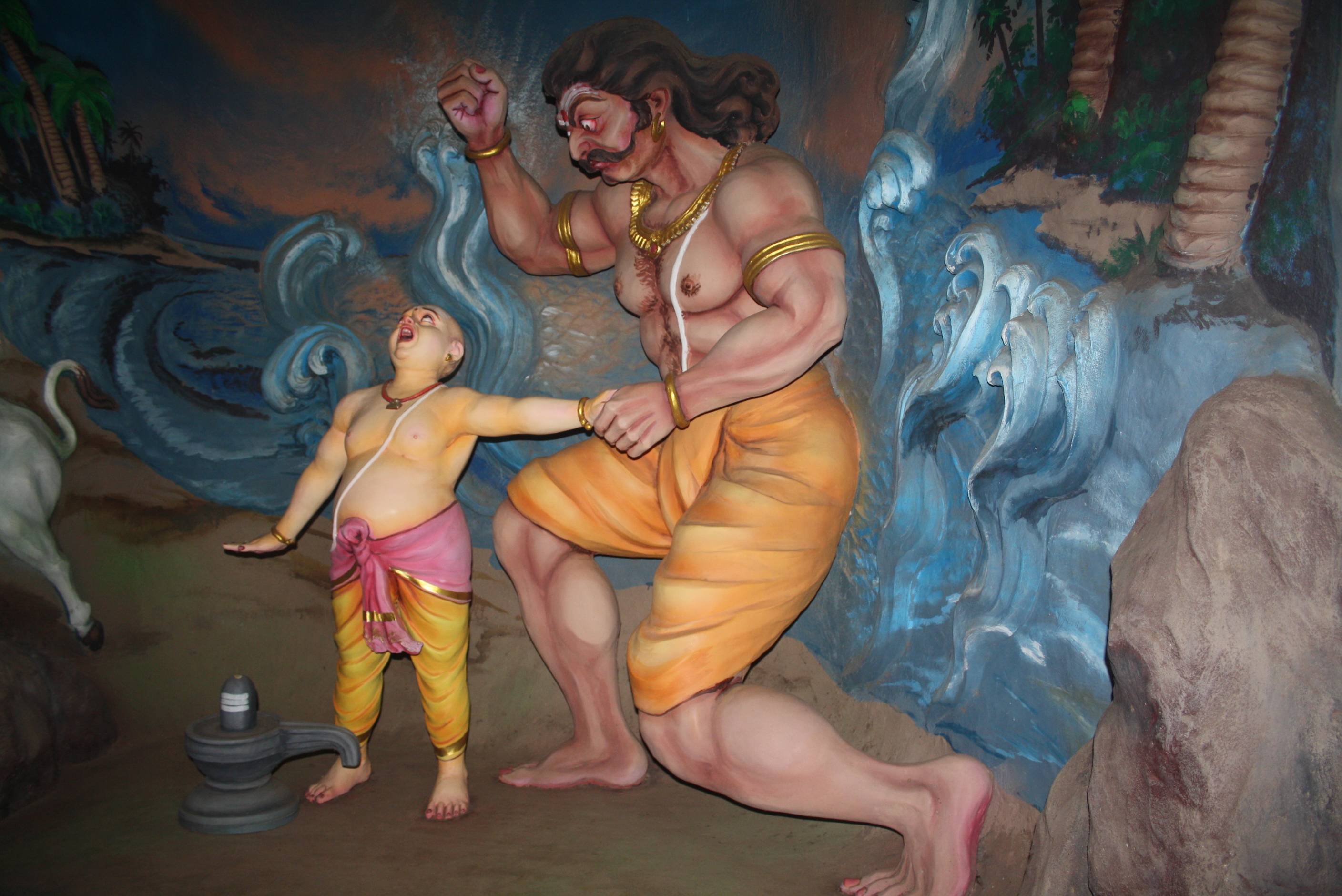
As predicted, before Ravana could return after completing his rituals, Ganesh had already placed the AtmaLinga on the ground. Ravana got angry and in an enraged state, he hit Ganesha.

Enraged he hit the Bramhin boy (Ganesha)

Enraged he hit the Bramhin boy (Ganesha)

Vishnu then removed his illusion and it was daylight again.  Ravana, realising that he had been tricked, tried to uproot and destroy it.

Ravana uprooting the Atma Linga

Ravana uprooting the Atma Linga

Pieces of the Linga

Pieces of the Linga

Due to the force exerted by Ravana, some pieces were scattered. One such piece from the head of the linga is said to have fallen in present day Surathkal. The famous Sadashiva temple is said to be built around that piece of linga. Then he decided to destroy the covering of the AtmaLinga, and threw the case covering it to a place called Sajjeshwara, 23 miles away. Then he threw the lid of the case to a placed called Guneshwara (now Gunavanthe) and Dhareshwara, 10–12 miles away. Finally, he threw the cloth covering the AtmaLinga to a placed called Mrideshwara in Kanduka-Giri (Kanduka Hill). Mrideshwara has been renamed to Murudeshwara.

Quite enchanting and after having spent more than an entire day in this enchanting place, I returned to collect my backpack and take a bus to Bangalore… From there, my next stop was Sravanabelegola! Another ancient and yet very enchanting place full of beauty and history.

Rimbick Basecamp

After having spent more than a week wandering across mountains of Himalayas, with a hope to witness the beauty of the Kanchenjunga we had hoped for a better ending especially when we had reached Sandakphu. Bearing the freezing cold of Sandakphu at 14000 feet was all worth it and could have been a complete experience, had we witnessed to see the Kanchenjunga peaks up close and personal especially from the top most point of that beautiful location. Nonetheless, we salvaged some of the situation after our alighting to Gurdum was truly enchanted by the stay there. Since we got down sooner than on other days, we had a lot more time to spend in Gurdum and we had made the most of it with the beautiful, serene and silent cottage at that camp.

While we did that, we were really hopeful that there was a lot more to the Himalayan trek than just this… Sadly, the time for the trek was about to come to an end. We were to alight to the final destination on this trek after Gurdum camp. Yes, of course, there would be civilization, local markets, hot water to shower, lesser cold and very little clenching of teeth… But that was all worth it when you come up to these heights. A world of it’s own, you began to be enchanted and somewhere deep in your mind make up a world of your own… Something that you would always want to enjoy without having to let go of the experiences that you underwent. We all had that kind of a feeling. The place was much more relaxed, by this time all of us had began to understand each other a lot more. Some had drifted from their regular group and joined others… We had bonded very well in a span of this week… Once we reach the basecamp, we knew all that was going to be over… With our goodbyes and farewells, we knew we may not be able to spend much time later. So I guess, this was that one last trip as they say… One last shot at making the most of our entire journey.

With that thought in our mind, we set off on a journey towards civilization, a last descend downwards to the chaos of life. One that we all had missed for days, but never complained. Such was this journey and such are treks of these kinds, especially in the Himalayan terrains, terrains where there is peace and redemption.

Himalayas, Sandakphu, Darjeeling
The final journey begins…

We started our last trekking bit on this expedition with a stride in our step and a heavy heart… Nonetheless, we had to make sure that this last journey was going to be full of great memories and beautiful pictures. We were hoping this terrain to be a bit different.

Villager Farmboy
Mhane Chandra

On our way we met Mhane Chandra. He was going up to cut firewood. To him, this sickle is going to be a life, a life full of what his parents told him about… A life full of dreams and a life that will provide him and his family what they need… But who will guarantee that these forests and the trees will last long? A question that I wonder for his future…

 While there was descent, we had to walk through some of these paths, where we had to carefully tread along the sides and worry about not slipping down the cliff…
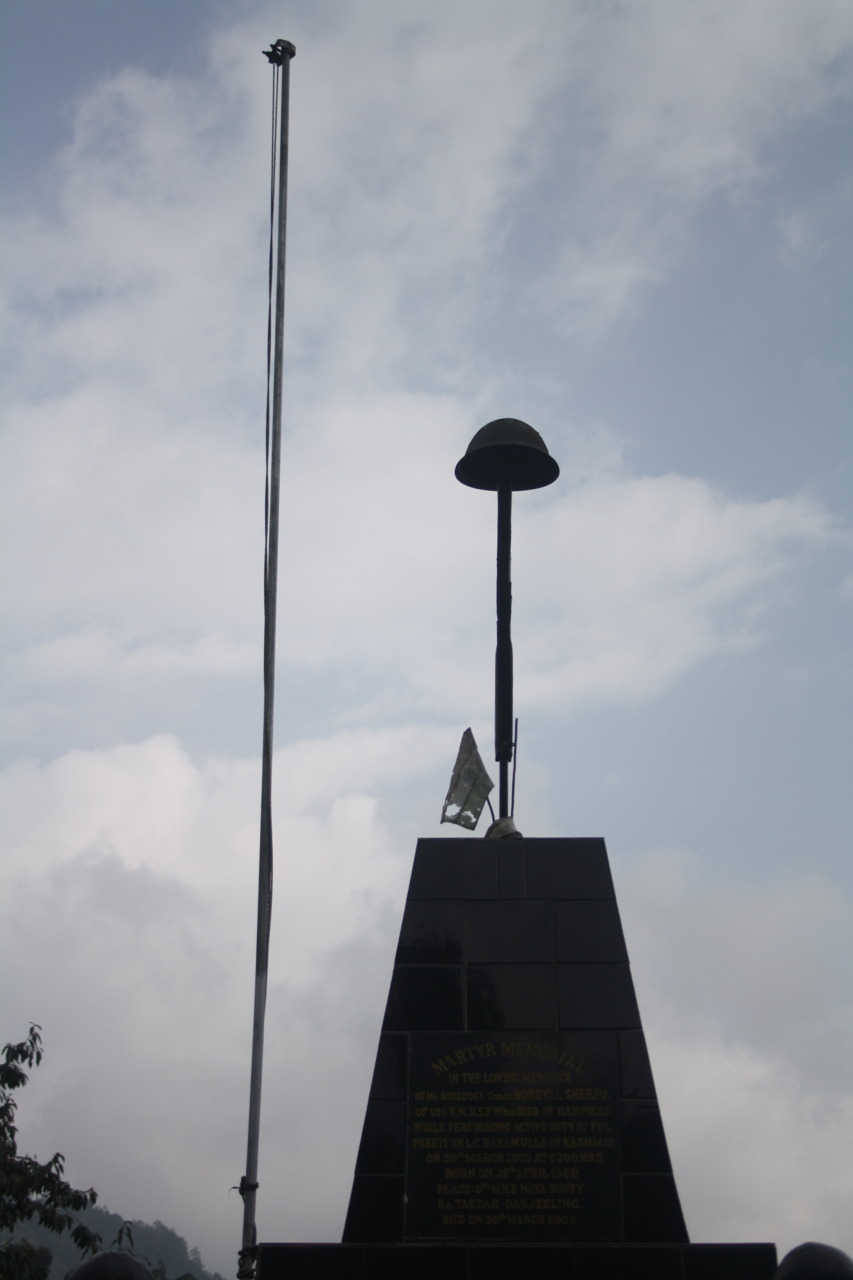
Norgyal Sherpa Memorial

Norgyal Sherpa Memorial

While alighting, we found a few small villages within the mountains. There we also found this. And this was something which took my breath away and held my head high and hands close to my forehead, to salute the heroism of this small village within the descents of the great eastern Himalayas. This is a great story of a local lad, who gave his life for our Country… It’s a War Memorial in this Sherpa’s name… of the Gorkha regiment… A salute to Norgyal Sherpa.

Srikhola River
Srikhola River

This was one of the popular landmarks on this route. Once you know you’ve reached the Srikhola River, you know you’re 5 kms away from Rimbick.

Bridge over Srikhola River
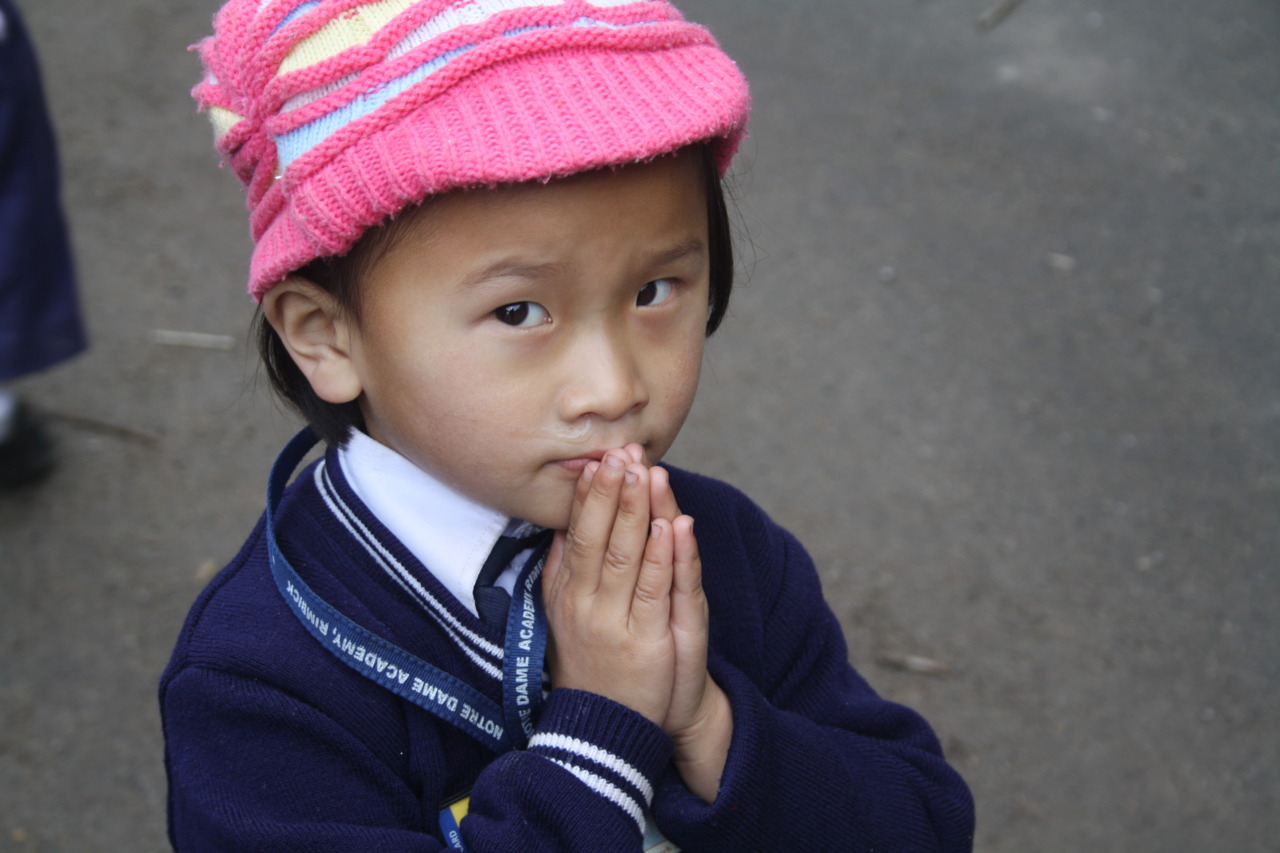
Nishing Leng
Nishing Leng
Nishing Leng
Nishing Leng

That’s Nishengleng, cute kid… we were walking past her school and she saw my camera.. She said, take my picture… We did and she said Namaste to us… besides the picture, she enjoyed some great candies which we dished out 😉

From then on, it was just a little bit for us to walk to the base camp… And that would mark the end of a journey, beginning of a cherished memoirs something to remember for…

Kalipokhari – Land of the Black Lake

So, as soon as we set off for Tumling, we actually entered mainstream Nepal. Tumling was still on the borderland but as soon as I received a Vodafone SMS letting me know they gobbled up 99 bucks for International Roaming, I was sure about the fact that we had entered Nepal. Anyways, my phone would be obsolete soon as the network and battery was going to desert me soon. Having said that, it was not even something I should have bothered about.

One of the best things about these treks is the fun of disconnecting yourself completely to the world and hibernating in a true sense. With great landscapes, beautiful view of mountains and valleys on both sides, what more do you want? So, one of the things I was waiting for was the Jaobari Monastery. It was a monastery in one of the villages in Nepal. Having said that, there was an interesting story I’d like to share here…

Lakhpa - One who's born on a Wednesday
Lakhpa – One who’s born on a Wednesday

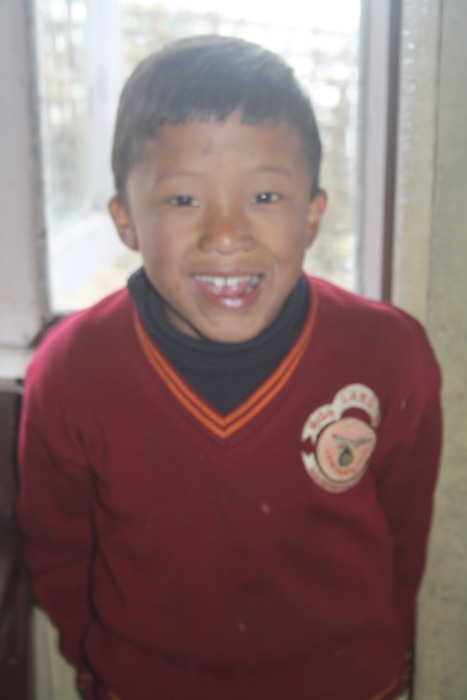
After an hour or so, we managed to reach Jaobari… where I happened to meet this cute kid, called Lakhpa… I asked someone later what Lakhpa meant? I got to know that a lot of Nepalese folks, name their kids after the day that they are born on. Which would mean, there would be a whole bunch of Lakhpas and Pembas (One who’s born on a Saturday) and many such names, which I don’t remember all that much now… But why this guy was interesting, was cause of his insatiable smile and his spirited greetings to us when we entered the Tea shop. He had a fire as well as heartwarming gracious look in his eye. Another thing, I’m also born on a Wednesday… So if I was Nepalese, I’d probably be a Lakhpa. 😉
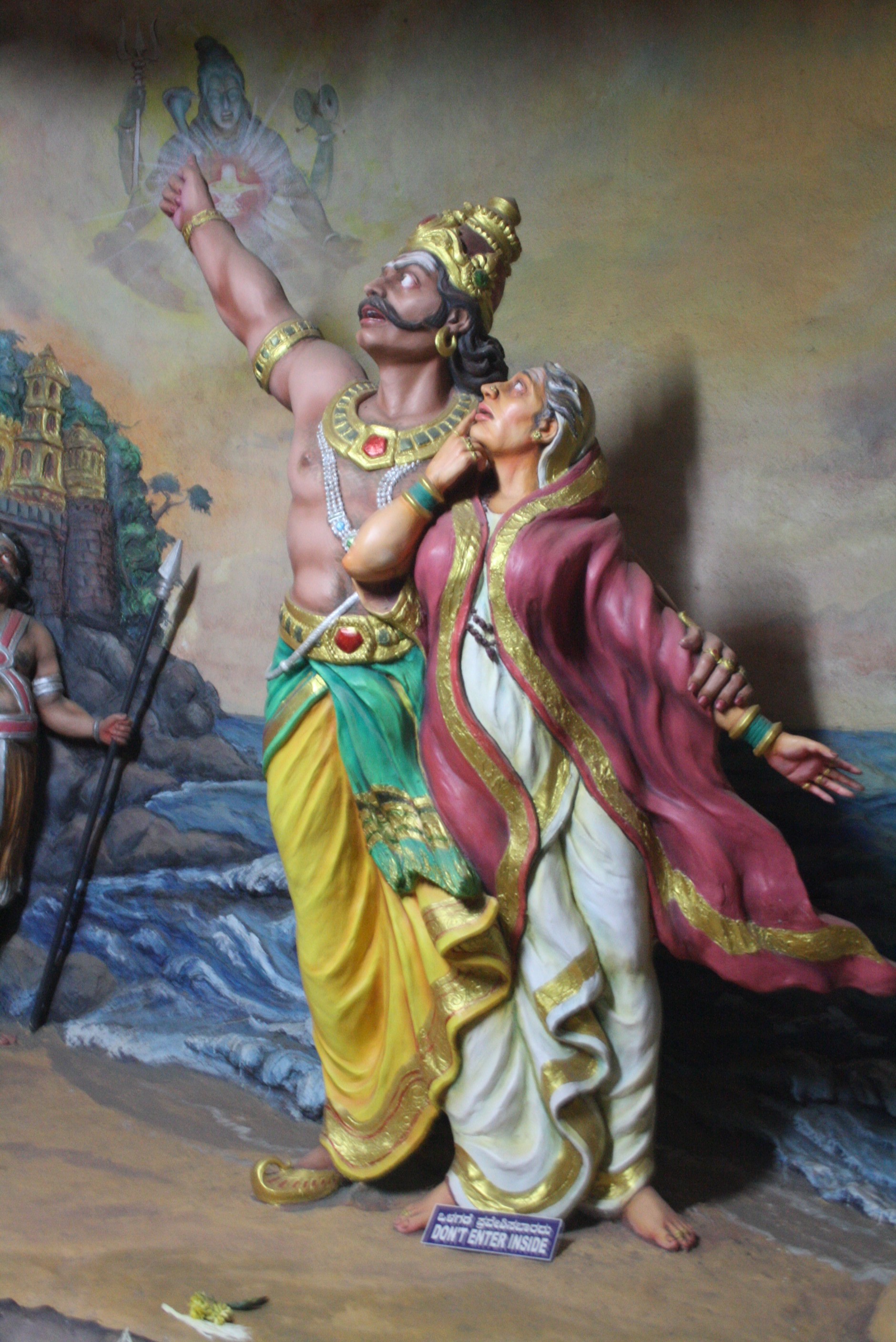
Jaobari Village
Jaobari Village

A beautiful view of the remote Jaobari Village in Nepal….

Jaobari Monastery
Jaobari Monastery

So here’s a little bit of the story I encountered in the Jaobari Monastery… While this monastery is a very quiet one on the corner of the village, something I learnt and something I’ll never forget that day. As I walked across the place, I found a few kids with books on Buddhism, which they were reading with great joy! As I entered the monastery I was greeted by it’s caretaker and the monk who taught the kids.

Shange Norbu from Jaobari Monastery

Shange Norbu… Shange means Buddha as he told me with a bit of pride and subtle smile on his face. One that denoted the passion he shared towards the religion he followed. He gave me a short tour of the monastery inside. Showed me a picture of his master / teacher a certain Pemba Norbu… Said he’s learnt a lot from him and he also showed me a picture of His Holiness Dalai Lama…

He asked me if I knew who he was? Smiling politely I said, of course I know who he is… “He’s the guy who hosted a Google+ hangout recently and I’m following him on twitter.” 😛 as I sheepishly thought in my head…

Being a traveller that I am, besides anything, boundaries and horizons always fascinate me. Distances and roads and maps and calculations are always on my mind when it comes to my travel… Just an impulse sometimes… Sometimes a bit too much this trait, that it makes me realize how travel is and should never be about these trivial pursuits or these kinds of funny meaningless achievements…

So I was thinking in my head (I’m in a Nepalese monastery… Just admiring the fact in my head, that I’m at an international location, since I havent ventured outside India yet)

“Is this monastery in Nepal?” I asked him.

“There is no Nepal no India… It’s all the same”  he replied smilingly…

I was speechless for a moment… I thought I’d explain to him that I didn’t mean it that way, but I realized, I got my answer… And that was quite a profound moment for me… I just smiled and shook his hands as I walked away…

Sherpa Kid
Sherpa Kid

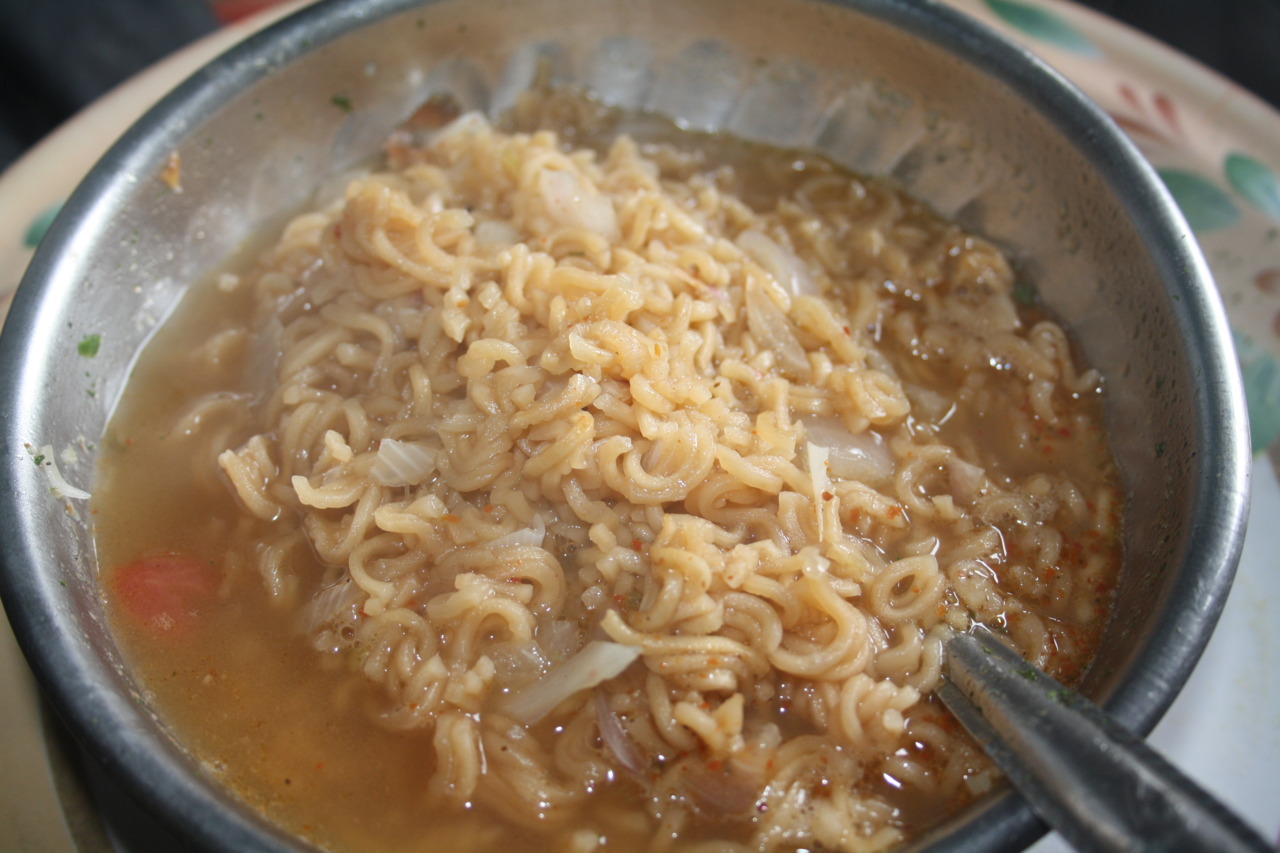
After trekking for 4-5 hours, when we reached a pit-stop, we decided to stop over at a small place, which served amazing food and great mint tea… While I’m not a big fan of mint tea or tea as much, I decided to try out the Nepalese instant noodles… This was their answer to Maggi. Rum Pum as it’s called.

Those are instant nepalese Noodles

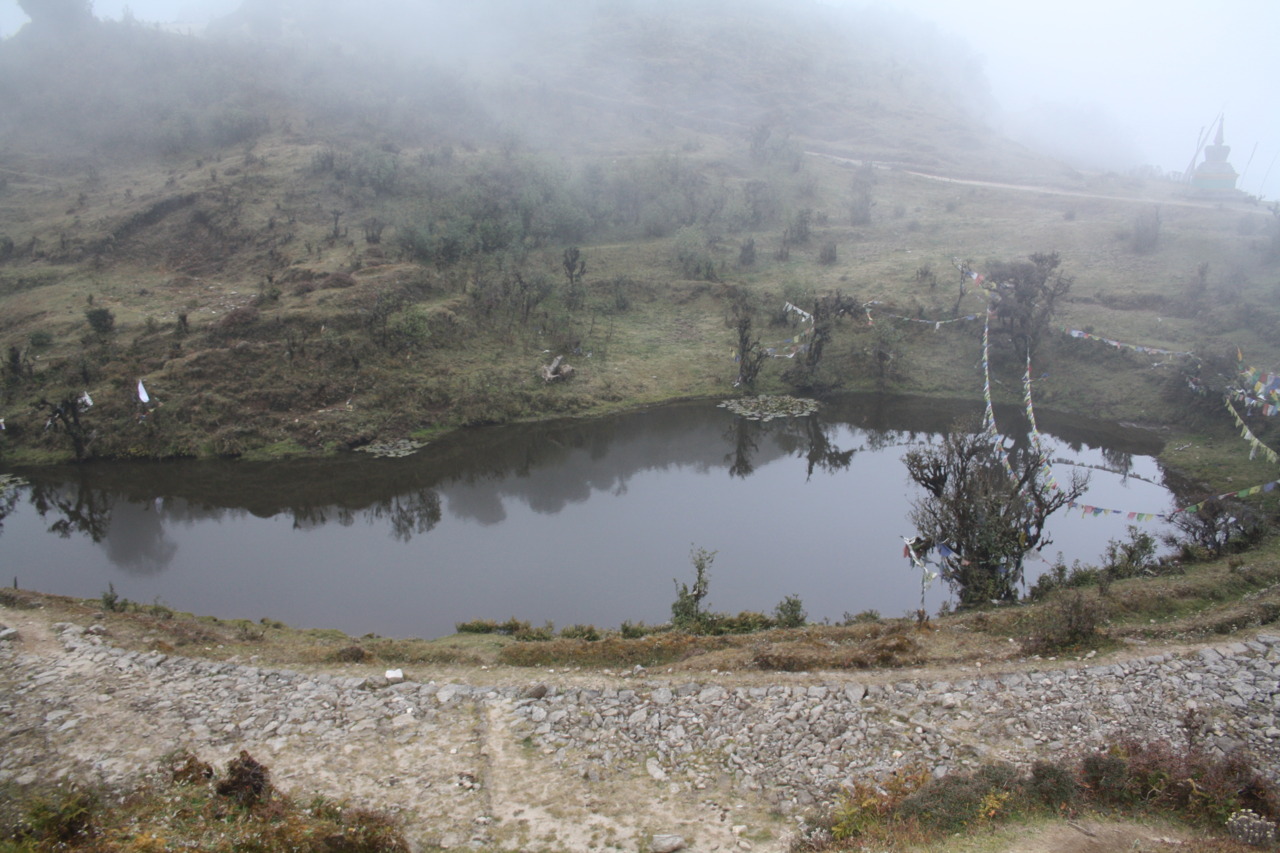
That was our last stop before we actually reached the Black Lake a.k.a Kalapokhri or Kalipokhri… It is believed that Nepalese villagers worship the black lake and no one is allowed to take a swim or a dip in this lake.

Kalipokhri Lake
Kalipokhri Lake

The temperature was freezing and it was already evening as we approached this village. We were waiting for the camp leader at the camp and he was waiting for us… Once we settled down, we sat by the fire inside the kitchen and started mingling with the locals… So much so, that we even had a chance to listen to Nepalese radio channel. Koshi FM… Some bollywood songs, and some Nepalese… The hard part or at least the first half of the hard part of this trek was taken care of…

Now the most trivial and the most exciting journey awaited us as we were about to move on to Sandakphu…

Darjeeling – Queen of Hill Stations

So my visit to the North East finally happened. Yes, didn’t visit a lot of places in terms of going far east… But yeah, quite good for a start. First up on my list was the most beautiful and ecstatic Darjeeling… Brilliant place and no wonder, it’s certainly deserves the title  ‘Queen of Hill Stations’

It started with Delhi. That’s was my destination post my Amritsar trip and I was to take a direct train from Old Delhi to New Jalpaiguri, from where I had to catch a bus/jeep to Darjeeling. Now, one thing I know a lot of people know about Old Delhi… If you don’t then hey, a warning, Old Delhi, by far is really horrible in terms of Hygiene, so be careful.

Another mistake I made was I took the Sikkim – Delhi to NJP Mahananda Express. Never ever take this train as it’s always late, no charging points in the train and no water in the train either, with filthy washrooms… Trust me, this one you can avoid. All said and done, after being 12 hours late, I reached New Jalpaiguri… I knew the wait was going to be worth it, since I couldn’t wait to reach Darjeeling. So much so, that I had to stay overnight in a lodge as it was kind of dangerous to drive up, especially at 2 AM in the morning… I joined a couple of fellow passengers from  the train… They were to go some place near, but decided to do so the next day.

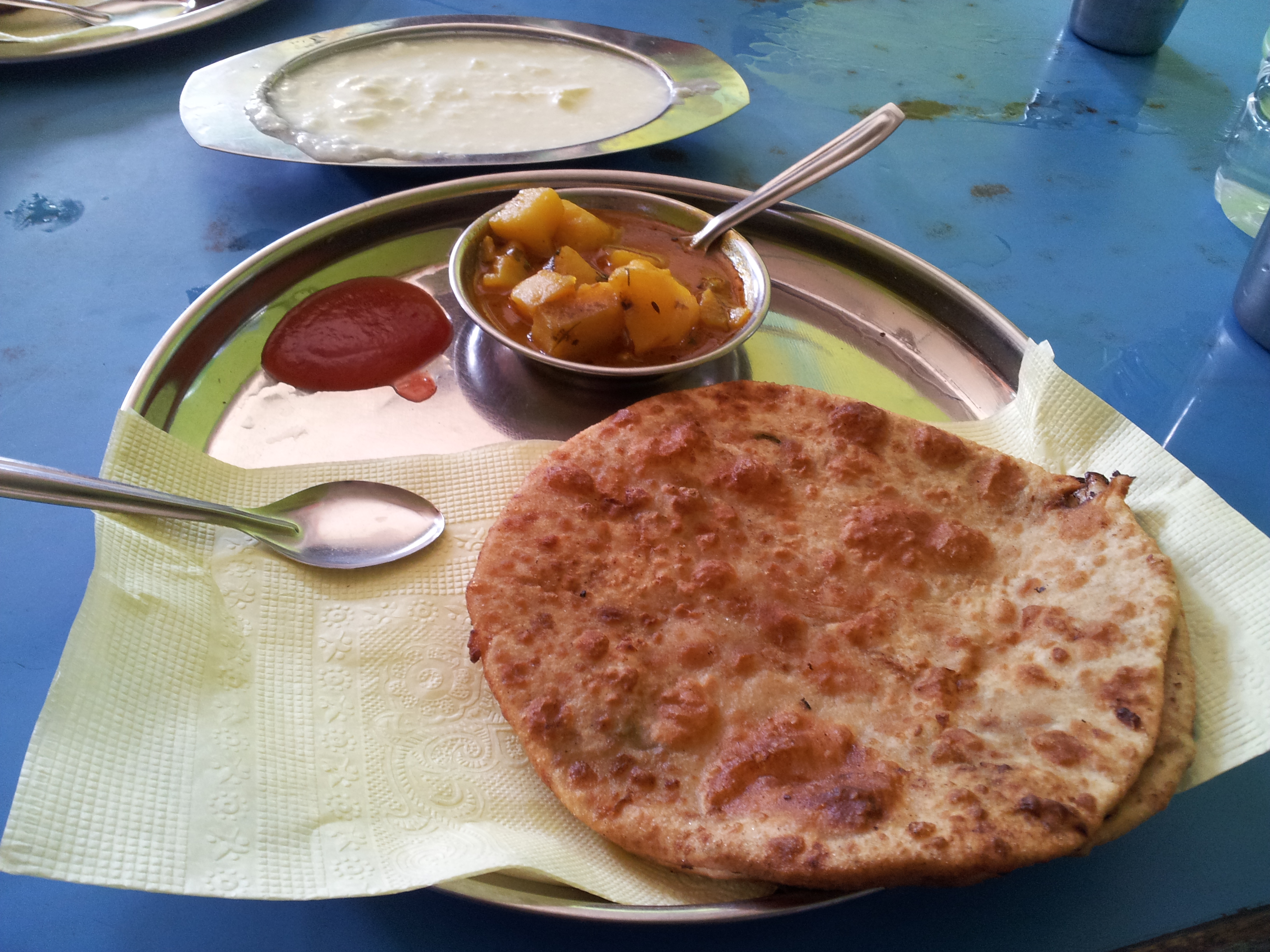
After waking up next day and eating an amazing breakfast in New my journey from New Jalpaiguri to Darjeeling began…

Amazing breakfast at New Jalpaiguri

Once the breakfast was over, It was time for me to catch a jeep to Darjeeling. Usually they take you for 200 bucks and you have to share your ride with other passengers, but it’s a good deal. Either ways you can choose to wait for a bus and get a cheaper deal. But all in all it’s a great idea to go in a jeep as you’d end up reaching faster!

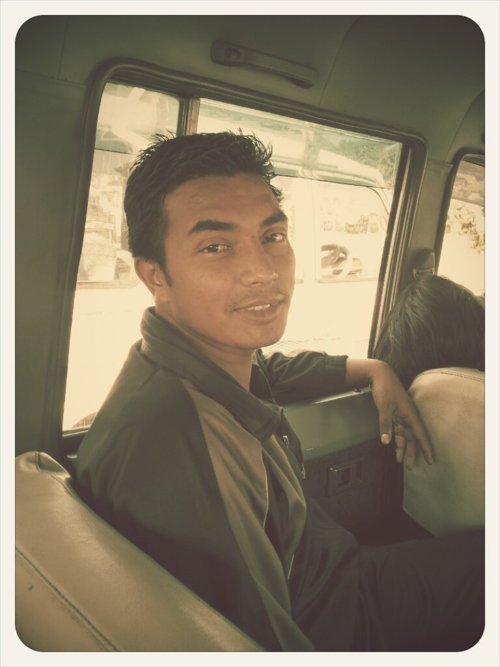
Bishal from the Indian Armed Forces

Meet Bishal, from Section 2 IC of the Indian Army. Posted at Kargil LOC (No Mans Land) He was going Home to meet his folks in Darjeeling.

Teesta River
Teesta River

As our jeep swayed into the curvy mountains heading up towards Darjeeling, we got this beautiful and picturesque view of the Teesta River. An enchanting look into the blue waters surrounded by the amazing Mountains leading up towards the Kanchenjunga peak!!! Was quite breathtaking.

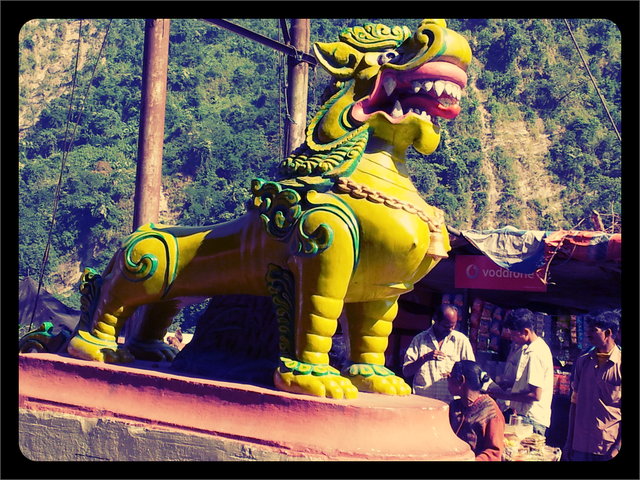
Near Tiger Bridge enroute Darjeeling

A flavor of the North East India, with a dragon statue near the tiger bridge while on our way towards Darjeeling.

Kanchenjunga Peak
Kanchenjunga Peak

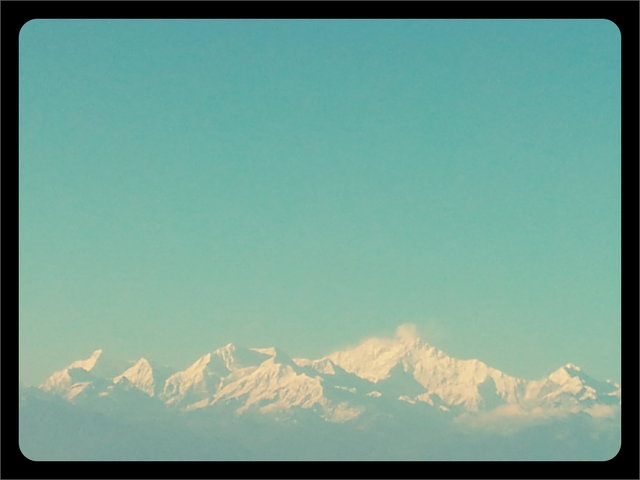
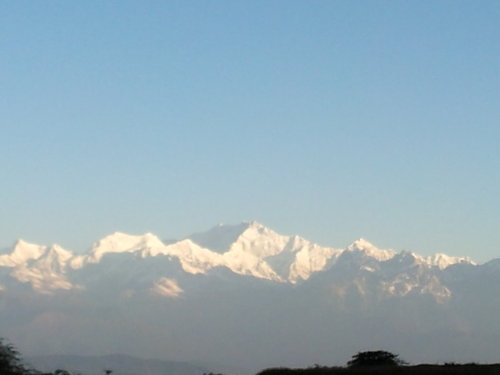
As we approach Darjeeling, we get a clear view of the Kanchengjunga Peak. Also known as the Sleeping Buddha for it’s stark resemblance to the Buddha and the peaks representing him sleeping.

As soon as I enter Darjeeling, it’s cold and we can feel freshness in the air and also a chilled out atmosphere which really gives me a completely different feeling. It’s as if we’ve entered a fashionable town with a lot of guys and girls on a fashion parade while the towns modern fresh look also blew me away. Besides that of course the Municipal tower and a couple of other heritage / ancient structures gave me a mixed feeling about this place all together. I had about two days to explore Darjeeling before we head out for our Sandakhpu-Gurdum trekking expedition.

So I decided to make the best out of it.

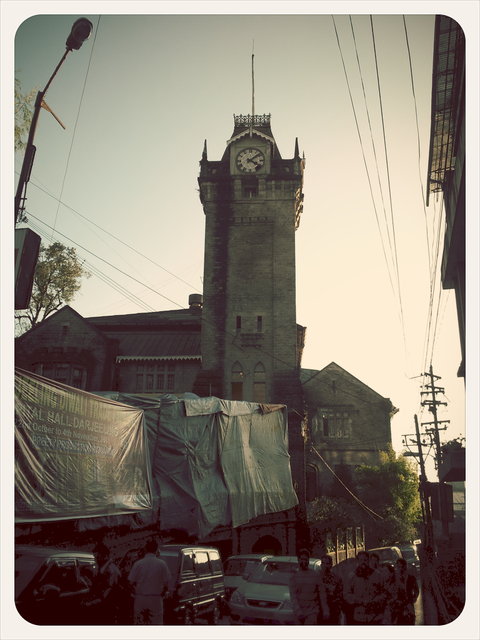
Darjeeling municipality building tower clock. Since 1850.

Darjeeling municipality building tower clock. Since 1850.

I settled down at our basecamp / Hotel Broadway Annexe… and after a nice sumptuous lunch, I decided to explore the town a little bit. Little did I realize that sun was already on it’s way to set and soon it would get dark… Without losing much time, I got towards the station, which is quite nearby and if you look at it, Darjeeling as a town isn’t that big…

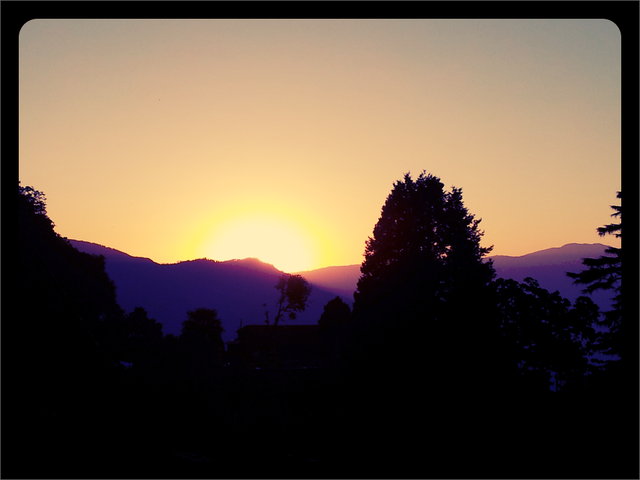
Early Sunset at Darjeeling

Early Sunset at Darjeeling

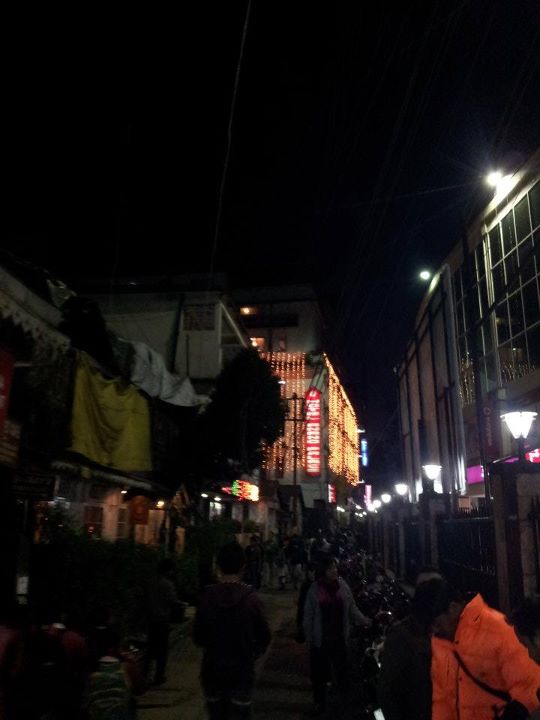
It was probably about 4.30 PM that the Sun set that day… By 5.30 it was already dark in Darjeeling and there is no way you can tell whether it’s 5:30 or 8.30 pm…

Darjeeling at 5:30 PM

Darjeeling at 5:30 PM

That also meant that pretty soon I had to go to bed cause the next day I had to wake up early and go to Tiger Hill to view the Sunrise across the Kanchenjunga Peak! But not before I beat the cold with some drinks at Joey’s Pub. Yes a very small British ambiance tavern, where you’ll find mostly British or Canadian tourists hanging out listening to retro numbers and chilling out! I went there with Mr. Shashi Patel, a businessman from Los Altos California I met while strolling around Darjeeling station. He was going to be my company to the sunrise point as well. So we decided to chill out and hang around for a while and talk about stuff here and there over a couple of drinks.

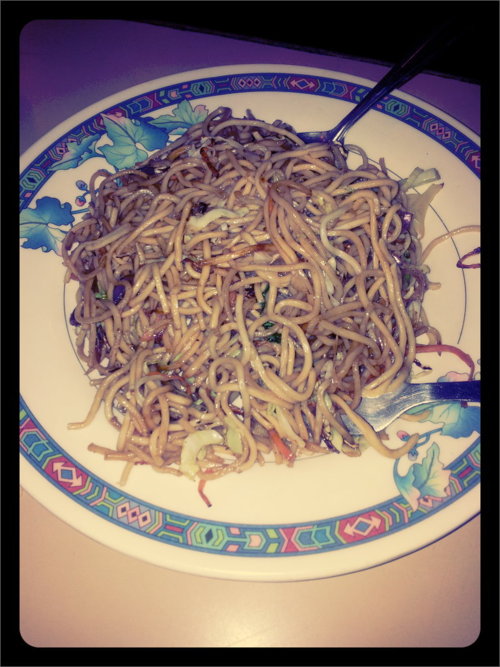
While I did that, I must say, the amazing Chow Min I ordered from the Joey’s Pub, was superb!!!

Veg Chow Min @ Joey's Pub

Veg Chow Min @ Joey's Pub

The next day was a short trip across Darjeeling where we visited the Sunrise Point At Tiger Hill, the Ghoom Monastery and a few other spots early in the morning. Also fascinating was the rooftop breakfast at Keventer’s cafe which is a 100 year old Cafe in Darjeeling!

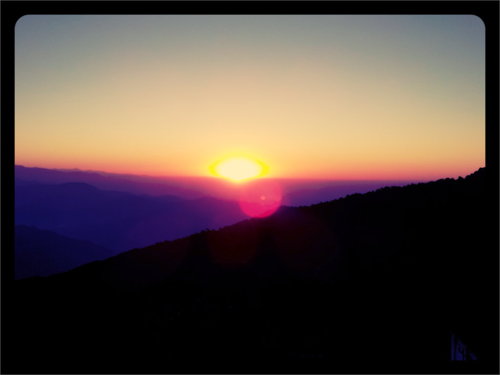
Sunrise At Tiger Hill

Sunrise At Tiger Hill

Sun shining across the mountain ranges

Sun shining across the mountain ranges

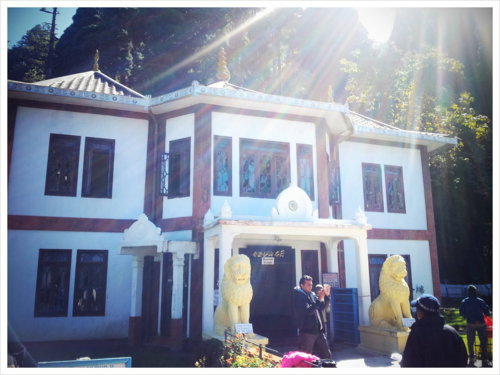
Ghoom Monastery

Ghoom Monastery

Shing Theng - A saleswomans kid outside the monastery

Shing Theng - A saleswomans kid outside the monastery

A 61 year old Tibetian refugee manufacturing & selling handicraft since 1972.

A 61 year old Tibetian refugee manufacturing & selling handicraft since 1972.

A view from the top...

A view from the top...

Keventer's Cafe - A 100 year old cafe in Darjeeling

Keventer's Cafe - A 100 year old cafe in Darjeeling

Darjeeling Tea

Hot Cup of Darjeeling Special Tea

After the visit at the Keventer’s cafe and of course the early morning trip to Sunrise point, Ghoom Monastery and other places, nothing was better than a hot cup of special and very tasty Darjeeling Tea!

Japenese Pagoda

Japanese Peace Pagoda in Darjeeling

All in all it was totally a trip that was worth it. Darjeeling is definitely the Queen of all Hill Stations I must admit.